Eating Better
Bristol Food Education Charter
By Jo Ingleby
Eating Better
By Jo Ingleby

Jo Ingleby reflects on the launch of the Bristol Food Education Charter – a youth-led initiative amplifying the voices of children and young people to reshape how food education is experienced across the city. Find out how to get involved.
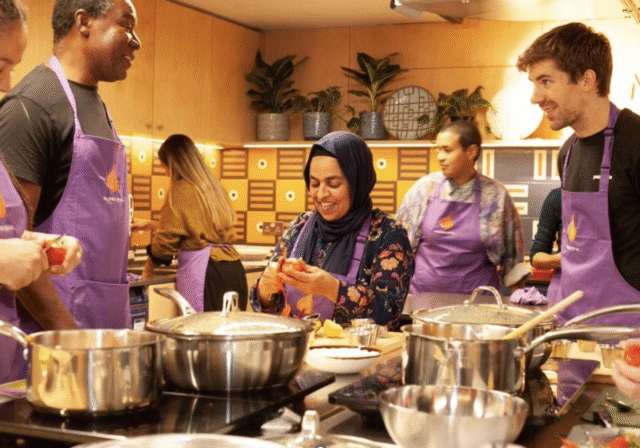
At the end of October, we launched the Bristol Food Education Charter at Felix Road Adventure Playground in Easton. This initiative was the culmination of more than a year of research conducted across the city, involving children and young people primarily aged 8-16. The project was funded by the Participatory Research Fund and was a collaboration between The Children’s Kitchen and the University of Bristol, with Dr. Will Baker leading the research. During this period, we organised hands-on sessions that included cooking or eating activities, and we asked questions such as “What do you think you should learn about food?” and “Where do you learn the most about food?”

Children and young people could express themselves through talking, recording, drawing or writing on giant sheets, filling the with ideas and creativity. The aim was to provide a platform for the youth of Bristol to express their views on what they should be learning about food and where. More than 300 children and young people participated through large events at Adventure Playgrounds, holiday sessions as part of the Holiday Activities and Food Programmes, and in primary schools.
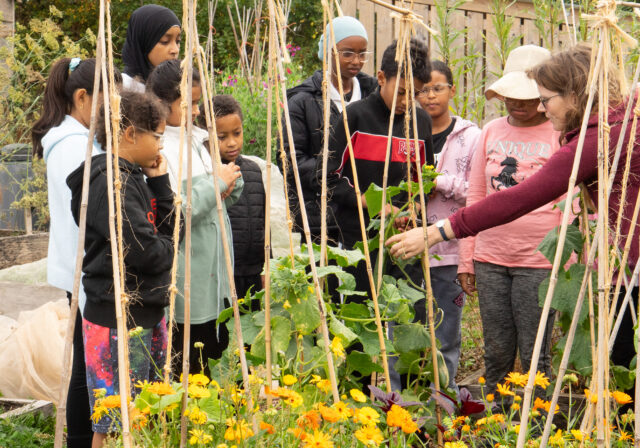
Our aim is for the Charter to be used as a tool for sparking change in settings that could do more to focus on food education, whether that is giving children and young people’s voices more prominence in their planning of menus and recipes for food sessions, or creating a growing space that young people can access. Many schools, play and youth settings are already doing this; the aim is for those who are doing well to inspire others and lead the way!
Another significant outcome of the research was the production of two podcasts by The Freedom Kids Podcast series, produced by Araceli Cabrera Cáceres. In these podcasts, children and young people from Felix Road interview each other about food and nutrition, offering insights into their concerns, passions, and aspirations related to learning more about food.
Many statements from podcasts left a lasting impression and prompted reflection. It became clear that food education is not solely about school; many young people expressed scepticism about school food messages because the food served in schools often does not align with the advice given. Often the options were ‘grab and go’ and not real meals. There was a common desire for more opportunities to cook real, complete meals rather than just single dishes or baked goods. They wanted to cook a dish multiple times or receive better recipes to try again at home. The cost of food and the distinction between healthy and unhealthy ingredients were recurring themes.

The research also revealed that many young people prefer learning in community, play settings, or at home, but they often lack sufficient opportunities to try cooking. Safety concerns, such as being trusted to use knives or ovens and fears of making a mess, were frequently mentioned; there was a feeling that young people are capable of much more than they are allowed to do. Older young people showed interest in pursuing careers in the food sector but felt that local opportunities were limited and that food-related GCSE options were not available at their schools.
“I want to have a job in a restaurant or similar establishment, but there are no options nearby except for a kebab shop and McDonald’s.”
Many primary school children reported that they rarely cook or have only done so once or twice. Almost all the children and young people we talked to wanted to cook more, and have chances to share food with others, even if they were already cooking in school or elsewhere.
“I don’t think there is anywhere to learn really because school doesn’t do it and I can’t do it at home.”
Over the rest of this school year, we will be continuing this research, working with groups of children and young people to co-design resources, recipes, session plans and resources to go alongside the charter so that if a setting pledges to support the aims, they have clear and accessible ways to develop their food education work. This work will involve key partners including Square Food Foundation, 91 Ways and the Pony Farm Bus. This continued research is funded by Public Engagement at the University of Bristol from the Research England QR Participatory Research Fund 2025-26. We will be engaging with schools, youth and play organisations who work with children and young people to ask them to make a difference to food education in the city.
If you want to know more, or pledge to support the charter you can access the full document, a toolkit to start your own research, and the Freedom Kids Podcasts at Bristol Food Education Charter, or email me at bristolfoodedcharter@feedingbristol.org.
To stay updated on future events, job opportunities and news, don’t forget to sign up for the Bristol Good Food Update at bristolgoodfood.org/newsletter. Read more about The Freedom Kids Podcast on this blog.
So, what change do you want to see happen that will transform food in Bristol by 2030? Do you already have an idea for how Bristol can make this happen? Join the conversation now.
* Required field