Good Food Governance
“What I took from Oxford Real Farming Conference 2026”
By Alice Peperell
Good Food Governance
By Alice Peperell
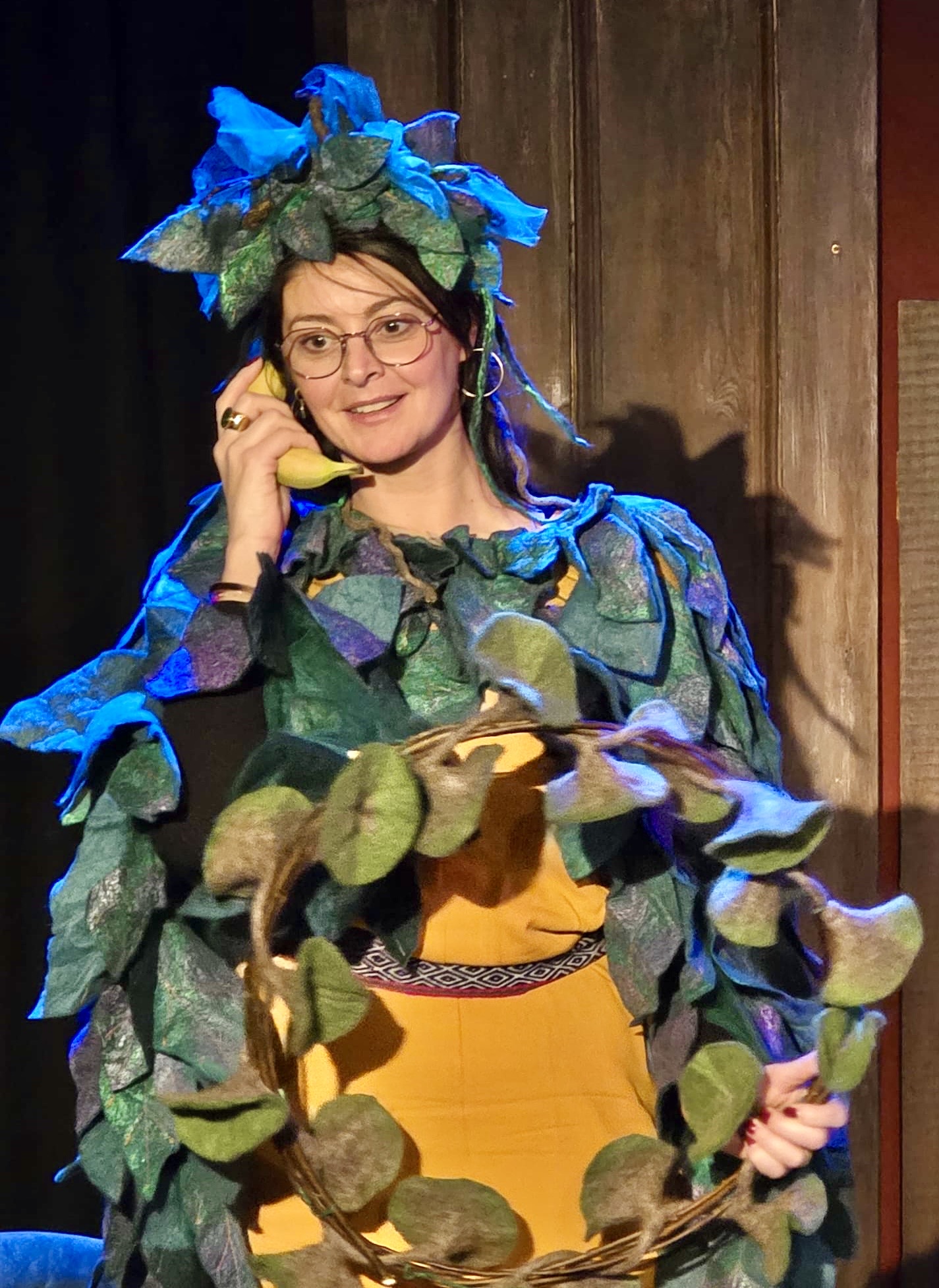
Rethinking power, care and connection in the food system: reflections from the Oxford Real Farming Conference 2026, by Bristol Good Food 2030 Partnership Manager Alice Peperell.
I’ve wanted to attend the Oxford Real Farming Conference for a long time. It’s held a kind of gravitational pull for me – shaped deliberately in contrast to more mainstream agribusiness forums – a space where food is treated not as a sector or supply chain, but as something deeply entangled with power, care, culture and how we choose to live with the land.
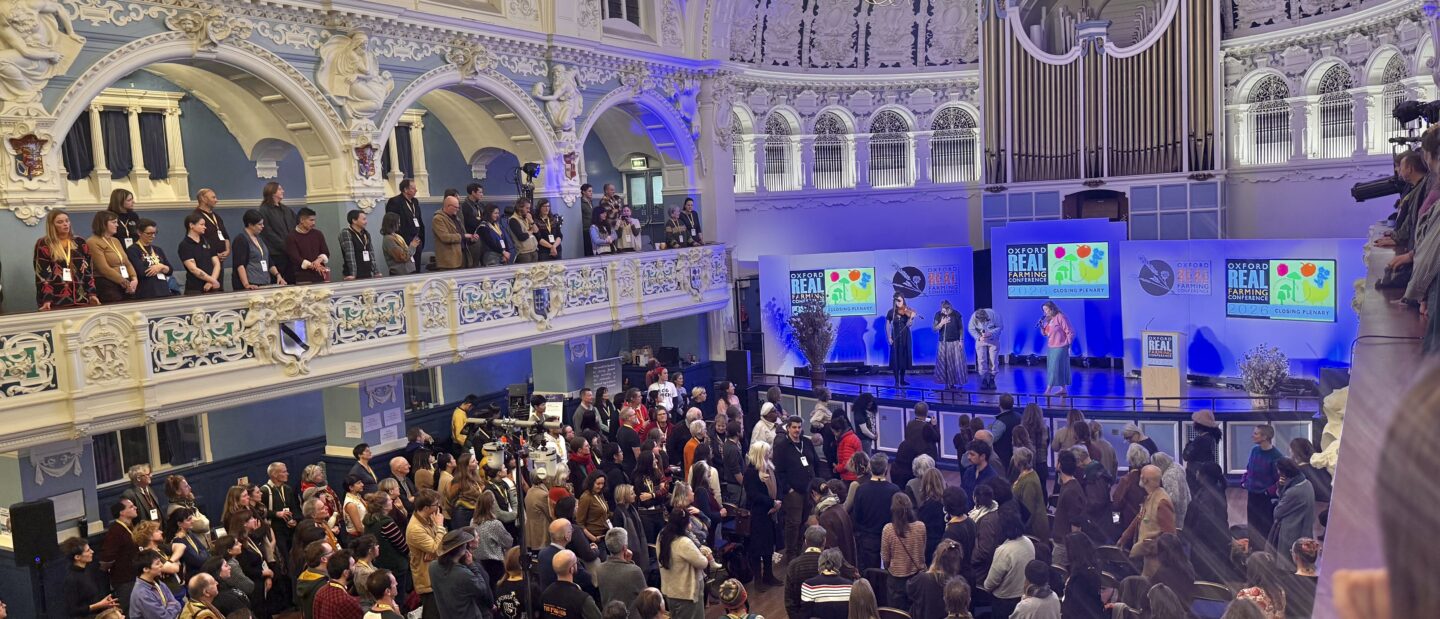
Going this year on behalf of Bristol Food Network and walking into a conference of more than 2,000 people, I felt both energised and oddly at home, as though many of the questions I sit with in my work were already being held, openly and seriously, in the room.
Spread across nine rooms and over 150 sessions, farmers, growers, organisers, researchers, artists, cooks, funders and campaigners came together around a shared relationship with land, and a shared understanding that food sits at the heart of multiple, overlapping crises – ecological, social, cultural and economic.
What stood out was not a single solution or policy fix, but a growing recognition that food system change depends on how we relate – to the land, to each other and to power. Again and again across sessions on finance, plastics, horticulture, community kitchens, Indigenous knowledge and culture, a familiar question kept resurfacing: how do we move from extractive systems towards ones rooted in care, justice and shared responsibility?
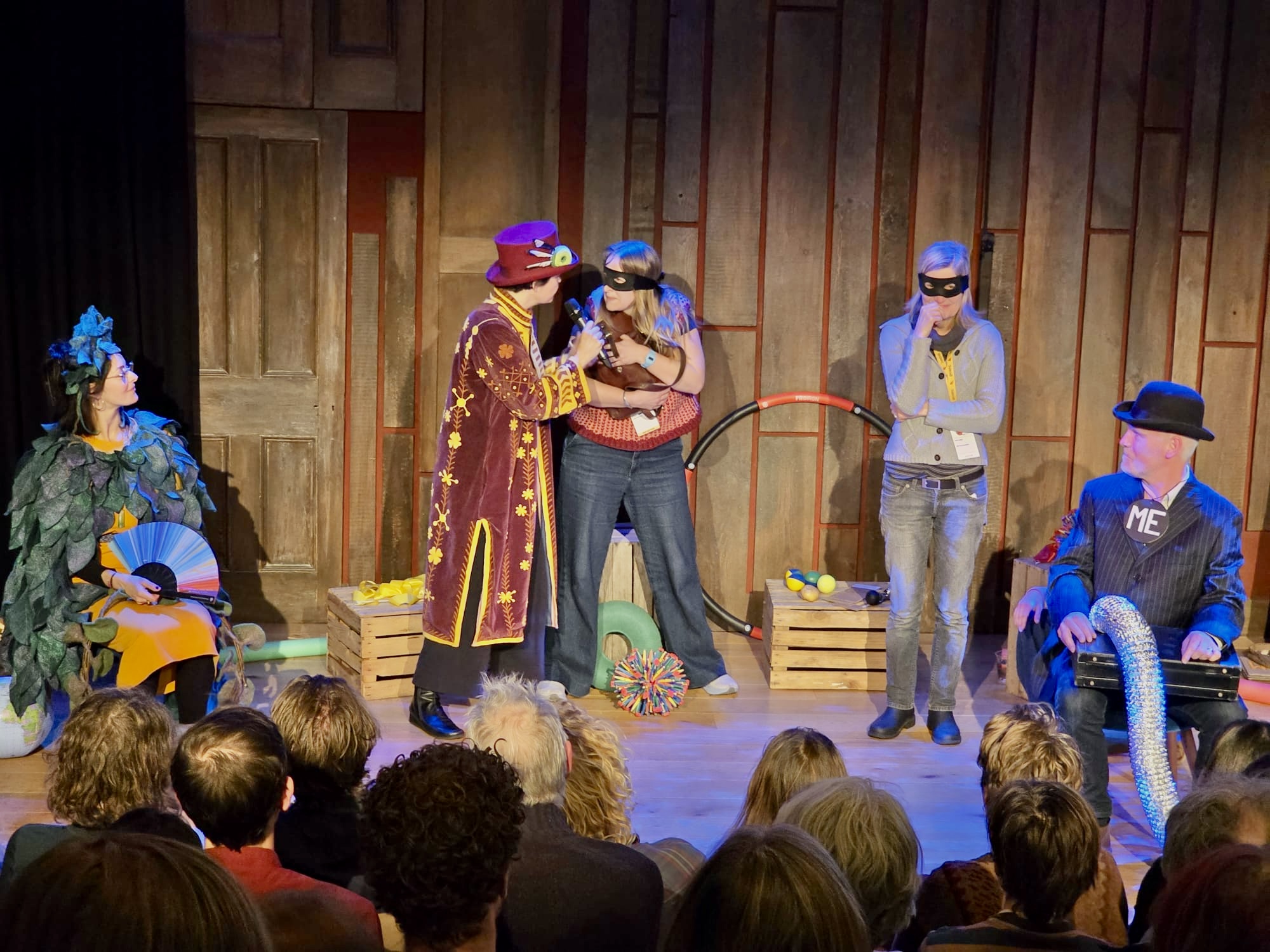
That question followed me all the way onto the stage – quite literally – when I found myself playing “Mother Earth” during the Doughnut Economics Circus! Playful and absurd on the surface, the act also carried a serious reminder: nature is not outside the food system. It is shaped by every decision we make, and by the values we choose to centre.
A workshop hosted by the Food Ethics Council explored the often uneasy relationship between funders and movements. What became clear was that funding is never neutral – it shapes priorities, timescales and even how success is defined.
Small, justice-led organisations spoke of being trapped on a fundraising treadmill, pushed towards speed, scale and polish at the expense of slower work grounded in trust, relationships and care. Diversity and justice, participants noted, are still too often treated as bolt-ons rather than foundations.
Rather than focusing on new grant mechanisms alone, the session pointed to the need for a cultural shift: longer-term funding, greater transparency and trust-based relationships that recognise funders as part of the ecosystem, not outside it. It echoed tensions I recognise from Bristol, and a growing awareness that expectations around pace quietly influence power, inclusion and whose voices are heard.
A session on plastics made clear that this is not a marginal or technical issue, but a defining challenge for food systems.
Plastics are now embedded at every stage from farm to fork, shaped by supply chains designed around convenience, uniformity and long shelf life. Microplastics are increasingly found in soils, crops and human bodies, with growing evidence of harm to ecosystems and health. While recycling and alternative materials are often presented as solutions, speakers were clear that these responses barely touch the root problem: a system built on overproduction and disposability.
What was most striking was how strongly plastics were framed as an environmental justice issue. The health and ecological impacts fall disproportionately on communities living near extraction sites, production facilities and waste infrastructure, while responsibility is repeatedly shifted onto individuals through narratives of consumer choice and behaviour change.
There was a quiet but powerful insistence in the room that this framing matters. Until we address plastics as a structural issue – shaped by power, profit and policy – we risk mistaking harm reduction for transformation and leaving those most affected to carry the costs.
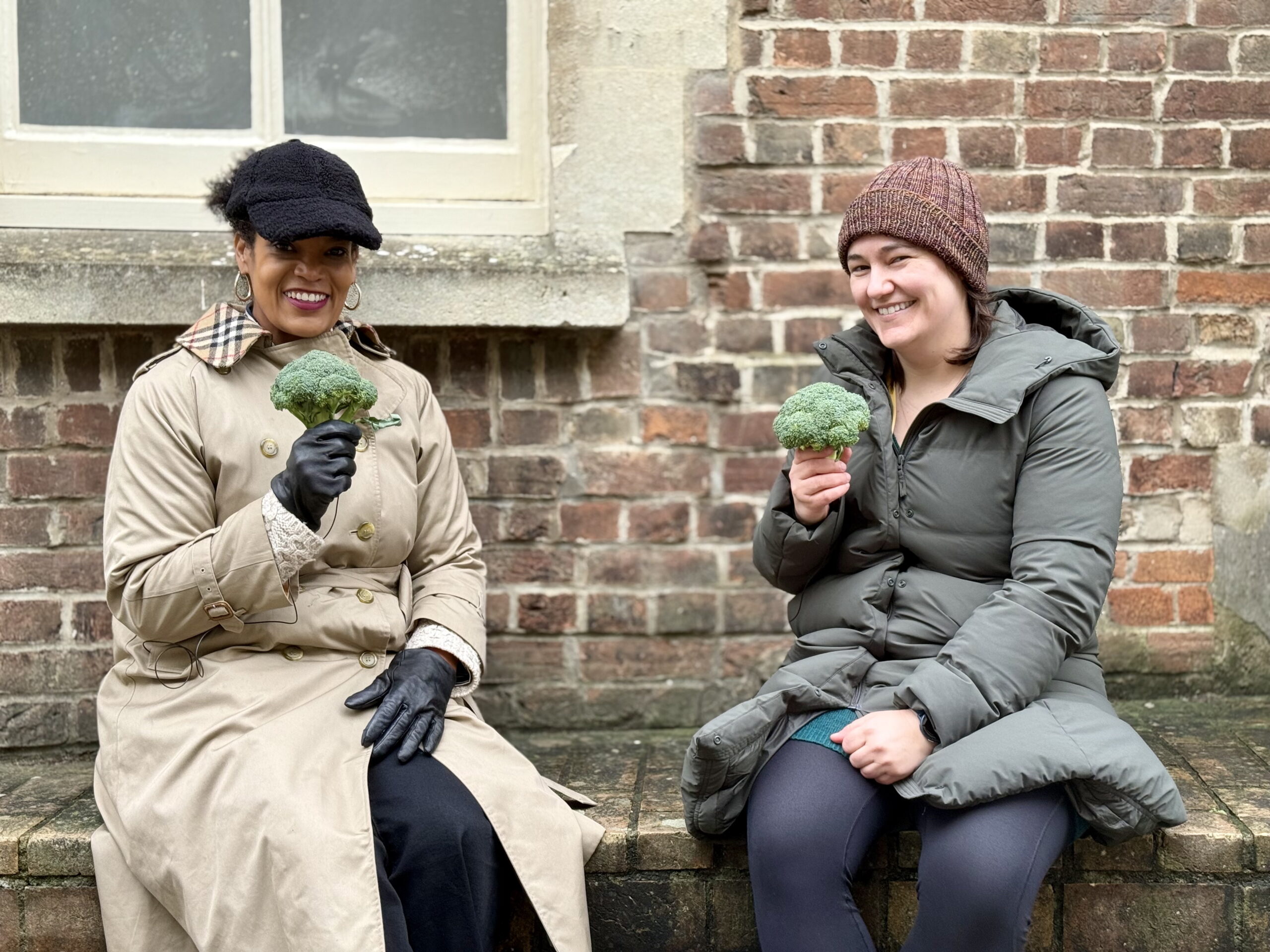
This session explored why diets remain so hard to shift, even when the evidence around health, climate and biodiversity is clear.
Rather than focusing on individual behaviour, speakers traced how power operates upstream. Corporate concentration and advertising shape what feels normal, affordable and desirable long before choices are made, with industrial meat and ultra-processed foods dominating public space and promotion.
Responsibility needs to rest with the systems that shape food environments, not the people navigating them.
The discussion pointed instead towards collective action – challenging harmful advertising, shifting policy and supporting “more plants” and “less but better” meat and dairy – as practical ways to unlock fairer and more lasting dietary change.
Questions of finance threaded through many sessions at ORFC, often surfacing as both a constraint and a point of possibility.
Again and again, speakers returned to the mismatch between the timescales of living systems and the logics that currently shape investment. Regenerative food systems, they argued, require forms of finance that are patient, protective and reciprocal – aligned with the long rhythms of land, labour and care.
Kate Raworth’s Doughnut Economics session made this tension especially clear. Nature is cyclical and relational. Finance, as it is largely designed, is linear and extractive. If food systems are to meet human needs within planetary limits, finance cannot sit apart from the biosphere – it has to be reshaped as part of it.
Some of the most affecting moments at ORFC moved beyond policy into questions of meaning, grief and belonging.
A panel featuring Jyoti Fernandes, Dr Lyla June Johnston, Rupa Marya and Pania Newton offered a powerful reminder that Indigenous knowledge systems are living frameworks for resilience – grounded in fire as care, food as kinship and joy as practice.
The emphasis was clear: meaningful change is not driven by better technical fixes alone, but by tending the inner landscapes that shape how we relate. One question lingered: “We were a keystone species – what have we become?”
One of the most practically grounded and hopeful sessions explored the Landed Community Kitchens project, led by Jade Bashford, Maddy Longhurst, Chiara Tornaghi and colleagues.
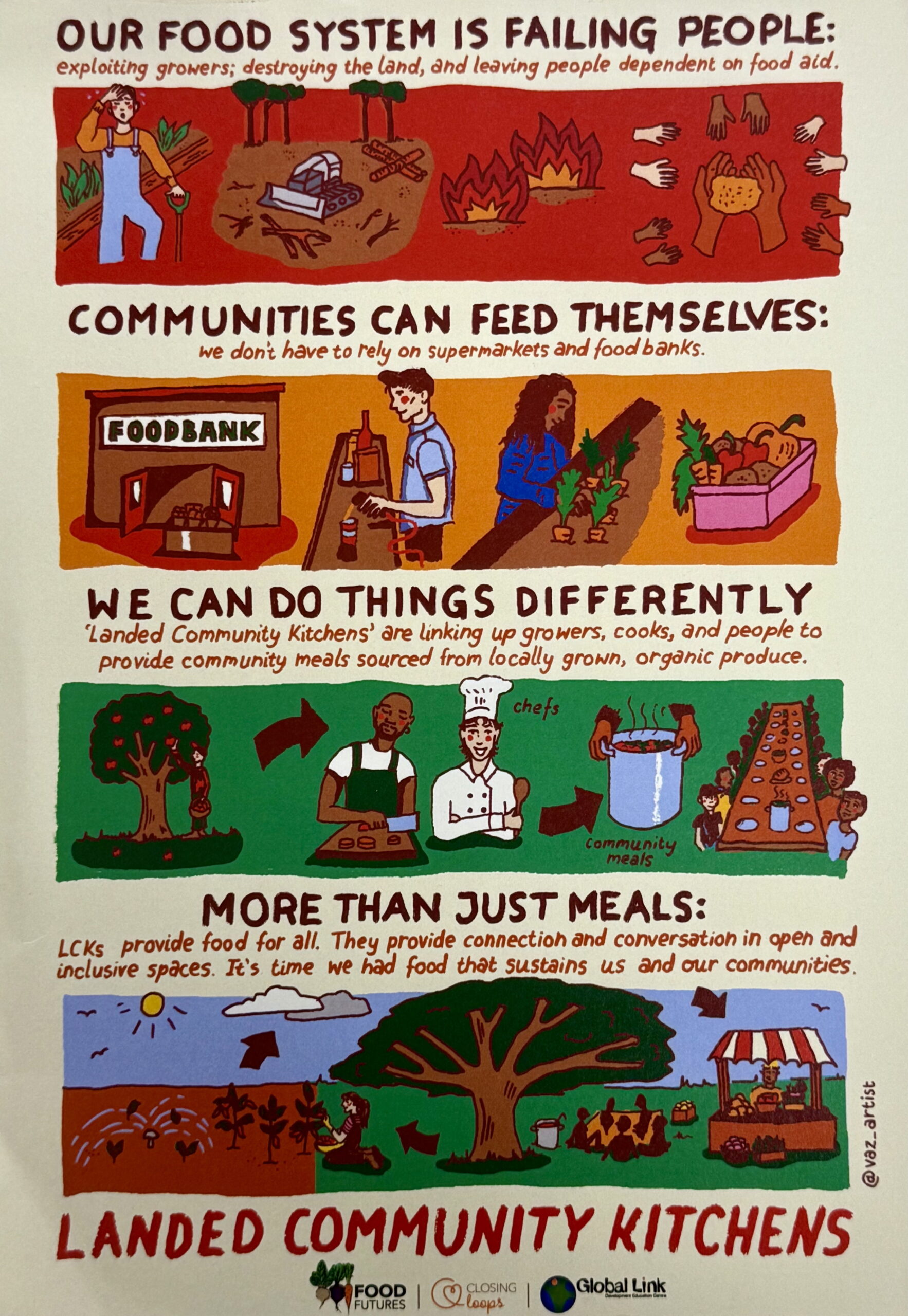
Rather than treating community kitchens as emergency responses, this work reframes them as essential neighbourhood infrastructure – places where cooking is recognised as care work, and where communities connect directly with agroecological producers.
The project is trialling different models across the north of England, linking kitchens with farms, CSAs and solidarity-based funding approaches. The aim is simple, but radical: ensure access to good food without relying on surplus, charity or underpaid labour.
As one phrase repeated throughout the session put it: “our hunger won’t starve a farmer”.
In this framing, community kitchens are not just places to eat. They are organising spaces, learning spaces and sites of dignity, strengthening farmer livelihoods, reducing isolation and rebuilding trust in fractured food systems.
I wasn’t able to attend this session myself, as it ran alongside the plastics panel, but I’m grateful to Leila from Feeding Bristol for sharing her notes.
The discussion explored how horticulture and health policy remain stubbornly siloed, despite growing evidence that local, agroecological food supports physical, mental and social wellbeing.
Projects such as Bristol’s The MAZI Project and Sims Hill Shared Harvest were highlighted as living examples of what an integrated food and health system could look like – rooted in community, nourishment and belonging. A key opportunity identified was collaboration between growers and social retail spaces, such as food clubs, helping to shorten supply chains and improve access to fresh produce in ways that are both dignified and sustainable.
What ORFC reinforced for me is that food system change is not just about producing food differently. It is about rethinking power, valuing care and investing – financially and socially – in the relationships that sustain life.
Many of the ideas explored already resonate strongly in Bristol: community food spaces, agroecological growing, food and health partnerships, and work that cuts across climate, justice and wellbeing. The challenge now is how we support this work to grow – not by forcing it into narrow outcomes, but by creating the conditions for it to thrive.
The conference closed with Satish Kumar reminding us that hope is not something we possess, but something we practise. I returned feeling more committed to staying rooted – in land, in relationship, and in the slow, essential work of choosing life.
To stay updated on future events, job opportunities and news, don’t forget to sign up for the Bristol Good Food Update at bristolgoodfood.org/newsletter.
So, what change do you want to see happen that will transform food in Bristol by 2030? Do you already have an idea for how Bristol can make this happen? Join the conversation now.
* Required field