Eating Better
How to eat better for 2026
By Nicola Deschamps (ANutr)
Eating Better
By Nicola Deschamps (ANutr)

What is healthy eating? Ask ten people, and you might get ten different answers! According to the UK government, healthy eating centres on the Eatwell Guide, which shows us how much of each food group we should include to have a healthy, balanced diet.
We’re encouraged to focus on fruit and vegetables, starchy carbohydrates, protein and dairy, or plant alternatives, while avoiding foods high in salt, sugar and unhealthy fats, as well as ultra-processed foods (UPFs). That sounds reasonable. Yet 67–70% of UK adults aged 19 to 64 do not meet the 5-a-day recommendation, and 57% of daily energy intake comes from ultra-processed foods, with a higher proportion (66%) among our children [1].
So why does it sometimes feel so hard to achieve this balance? We all lead busy lives with work, family and social commitments, and we are surrounded by easily accessible, convenient food, not all of which is healthy or balanced. These, together with other factors such as a lack of motivation and planning, poor habits, the cost of healthy food, emotional eating, tempting food advertisements, and more, can contribute to decisions that aren’t in our best interests.
Health, wealth and relationships are often seen as the core pillars of a fulfilling life. Feeling good allows us to enjoy life, financial stability provides security, and relationships offer support. This theory is relevant to food, too. Wholefoods are beneficial to our health, cooking at home helps save money, and sharing meals with friends, family or neighbours brings connection.
I’m a nutritionist who writes and edits print and digital content on all things food-related. I am passionate about plant-based wholefoods. I volunteer as a writer for Bristol Good Food, where I write articles highlighting the great work of local charities, businesses and organisations that promote healthy, sustainable food grown locally. So, I was delighted to accept the invitation to create a series of content on the theme of Eating Better, one of the six Action Plan themes championed by Bristol Good Food.
The focus of Eating Better is food education, healthy diets and community food skills. A report by Veg Power highlighted the importance of family mealtimes and the role of eating at a table. We’re social creatures, and there’s nothing more life-affirming than sitting down with family or friends to a delicious homemade meal cooked with love and care. So, let’s forget ‘takeaway’ Friday and make it ‘homecooked’ Friday! Whether you live with family, friends or housemates, try to make a home-cooked meal every Friday. ‘Family food Fridays’ is a perfect opportunity to show off your culinary expertise, experiment, have fun, and enjoy good food with loved ones.
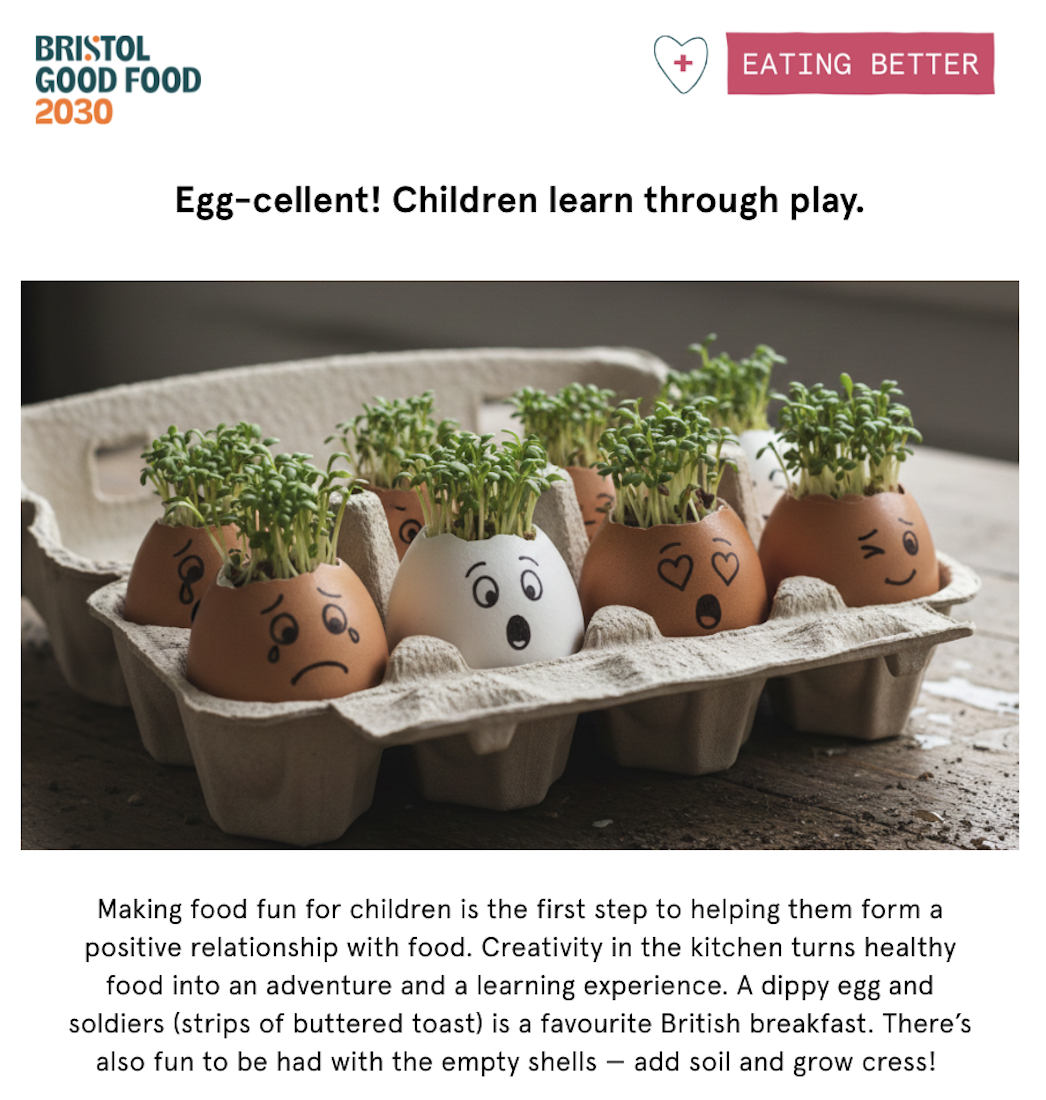
They say breakfast is the most important meal of the day. Why? The clue is in the name: break ‘fast’. The body has been resting for 7–8 hours and so needs nutrients to boost energy, nutrient stores, brain power and mood. So, let’s start our day with a good breakfast. It doesn’t need to be complicated, expensive or time-consuming. Recently, I timed myself while making porridge from rolled oats, topped with chopped banana. It took precisely seven minutes and 11 seconds to make, and it was delicious and filling!
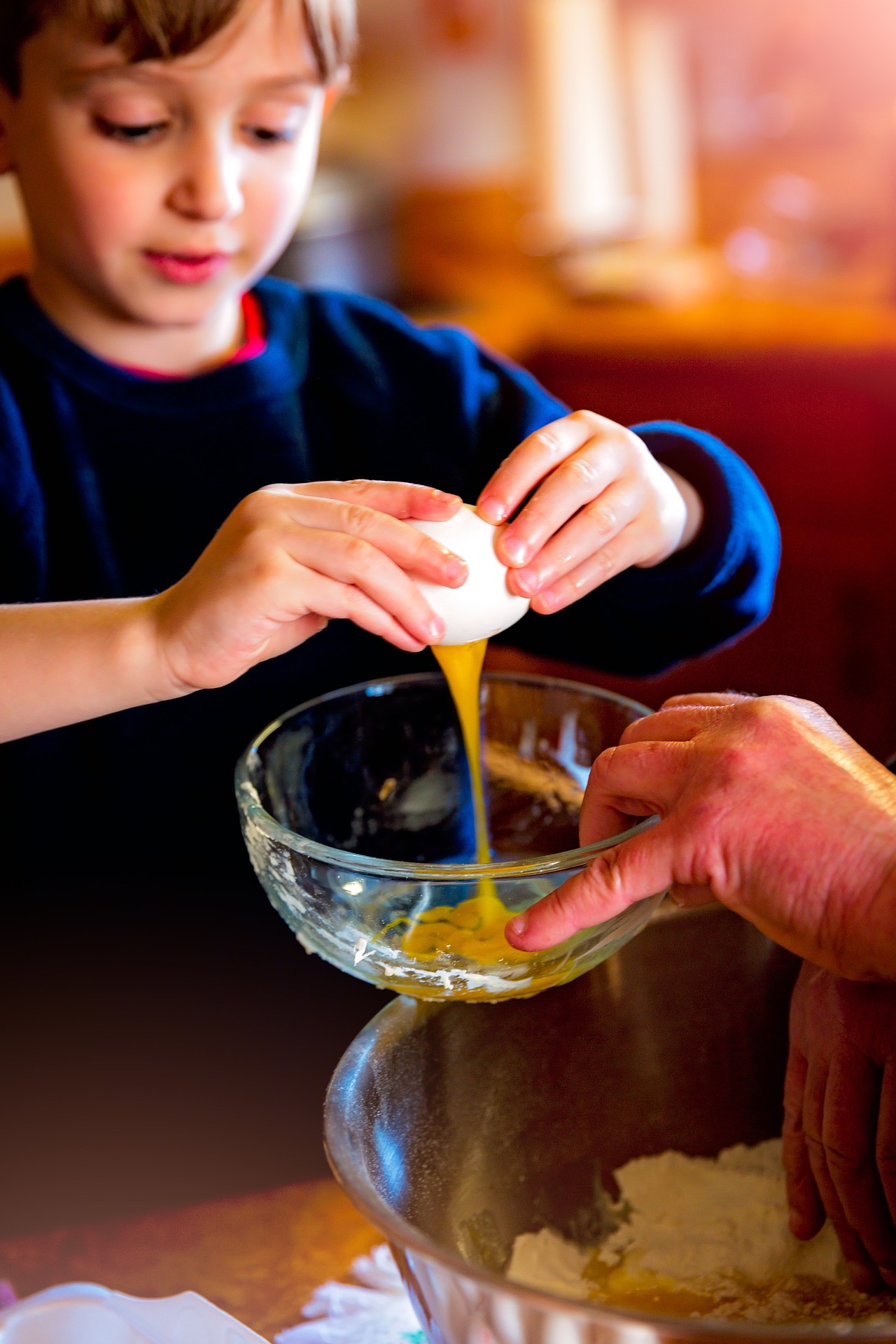
Getting children involved in the kitchen is so important. Yes, it may get messy, but the benefits far outweigh any negatives. Cooking is a hugely valuable life skill that has sadly declined over the years. If time is tight, just cook together once a week: try family food Fridays! Besides the physical, cognitive and social benefits of cooking together at home, children will develop a positive relationship with food that will serve them well throughout their lives.
[1] National Diet and Nutrition Survey 2019 to 2023
Nicola Deschamps (ANutr) is a registered nutritionist, author and editor: targeteditorial.co.uk.
To stay updated on future events, job opportunities and news, don’t forget to sign up for the Bristol Good Food Update at bristolgoodfood.org/newsletter.
So, what change do you want to see happen that will transform food in Bristol by 2030? Do you already have an idea for how Bristol can make this happen? Join the conversation now.
* Required field
Food Justice
Urban Growing
Eating Better

Eating Better