Urban Growing
Hazelnut Community
By Tilda Teale
Urban Growing
By Tilda Teale

Discover how an Easton community garden is helping people grow food in the smallest of spaces — from cardboard gardens to upcycled planters and heritage seed swaps. Visit Hazelnut Community to pick up practical growing tips, connect with local growers, and get inspired to start planting at home. Tilda Teale reports.
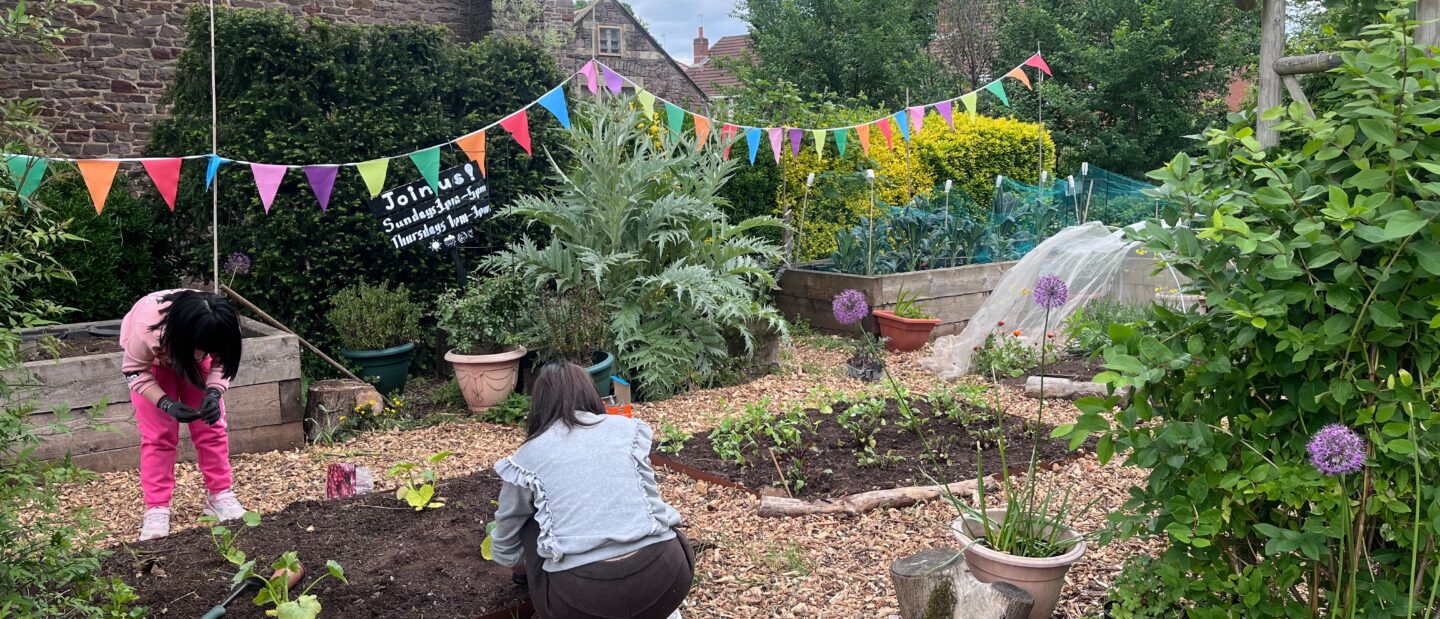
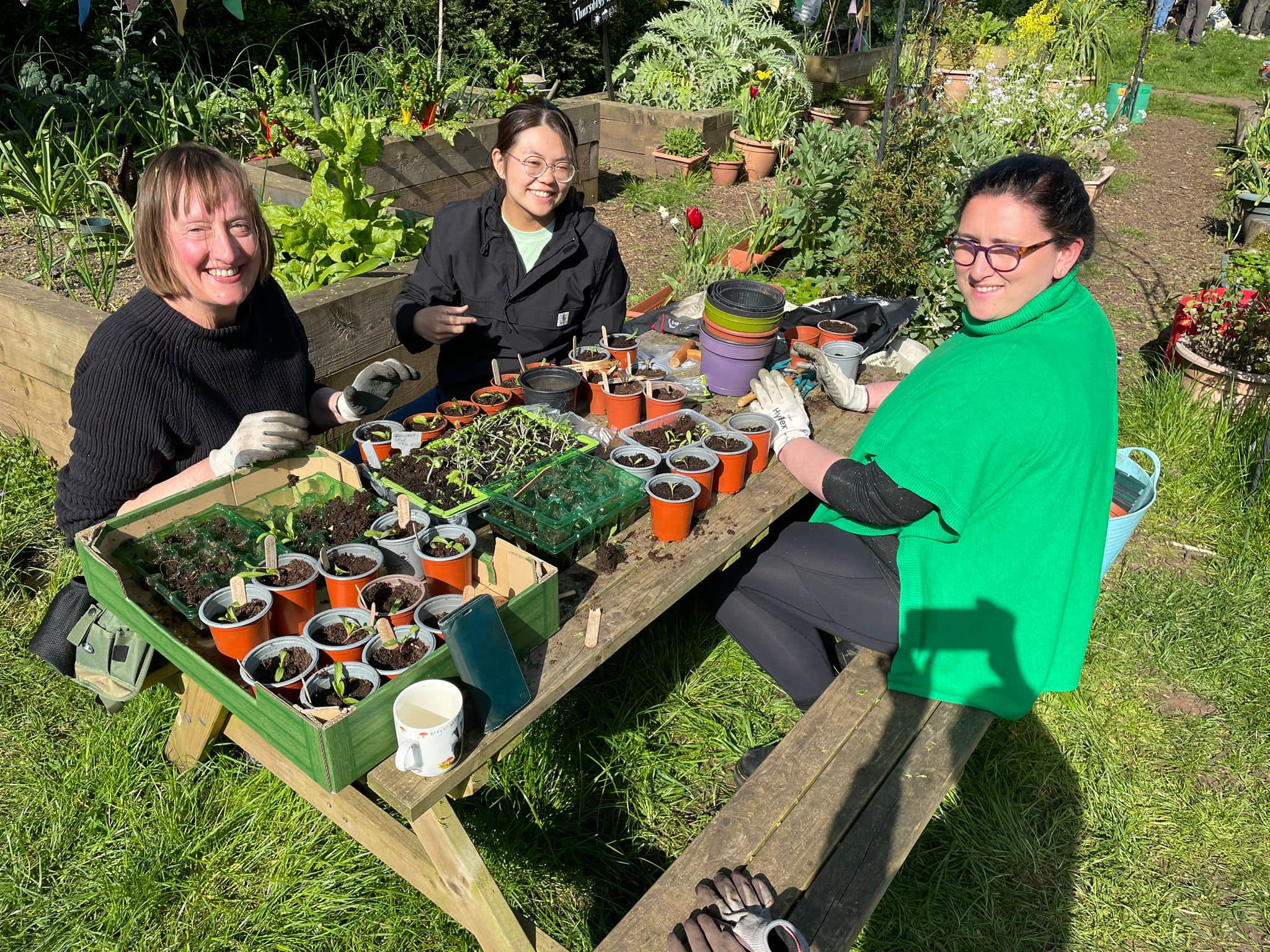
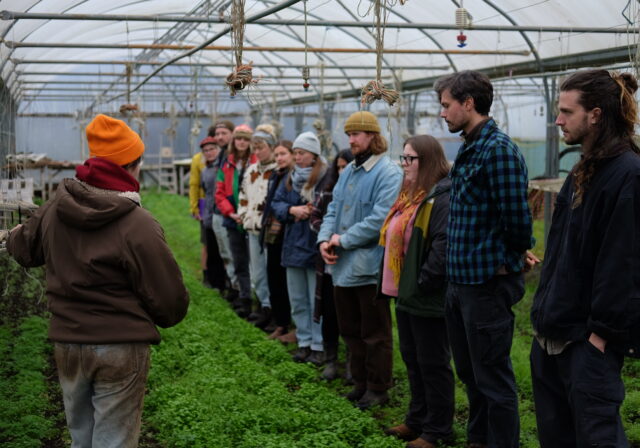
One of the biggest barriers to growing vegetables at home is not having the space. But, as I found at Hazelnut Community there are many ways to get creative with growing in unconventional spaces. The garden is within the grounds of St Anne’s church in Easton and one of the few green spaces that people living in the area can access. Anyone can enjoy the garden, and John White, the Reverand of the church, welcomes a group of growers every Thursday and Sunday to take part in tending to the land, the pond and the ‘bug hotel’. I joined one Sunday in early May, and we were digging holes, filling them with fertiliser, and planting tomato, celeriac and beetroot ready for the coming months of sunshine.
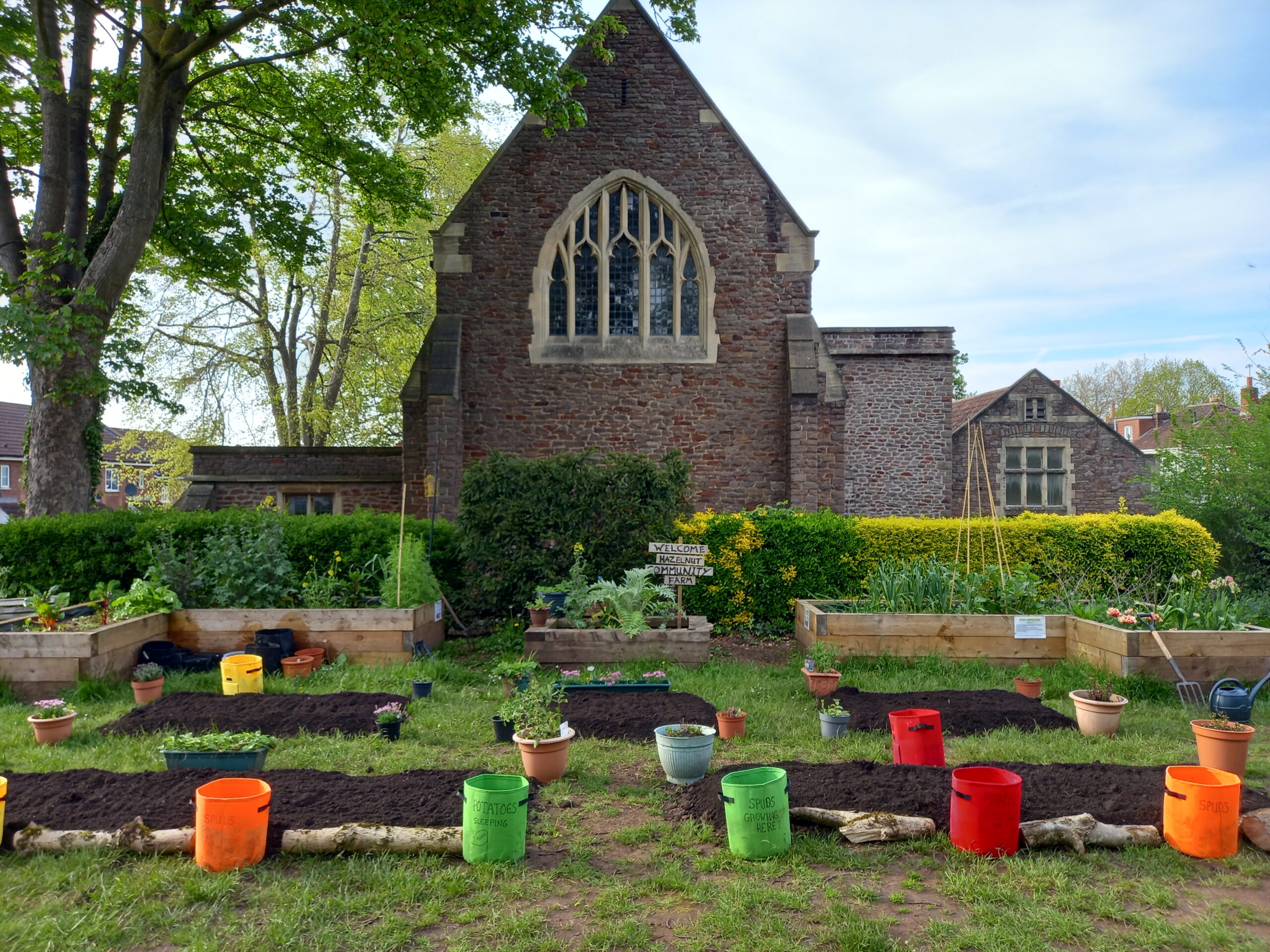
Volunteers told me the skills they had learnt at the growing sessions, tips like how to grow using ‘cardboard gardens’. These are prepared by leaving scrap cardboard on top of some earth, such as within shared outdoor spaces, to biodegrade over a few months to create structured soil ready for planting by the end of it. I also spotted a lot of upcycling within the garden; repurposed plastic containers, wheelbarrows or wooden pallets, which would otherwise become scrap, can be converted into a home for a tomato vine or spring onion shoots.
Along with upcycling and helping volunteers grow in small spaces the community garden is also promoting seed swapping. Angus, who leads the seed swap in the church, held every Sunday and inspired by the annual Bristol Seed Swap, is passionate about bringing more heritage varieties of seeds into the hands of local people. ‘Heritage’ describes seeds that have been recycled and conserved over many generations of the plant. They often have cultural significance, and it is important they are conserved within seed banks to prevent species going extinct.
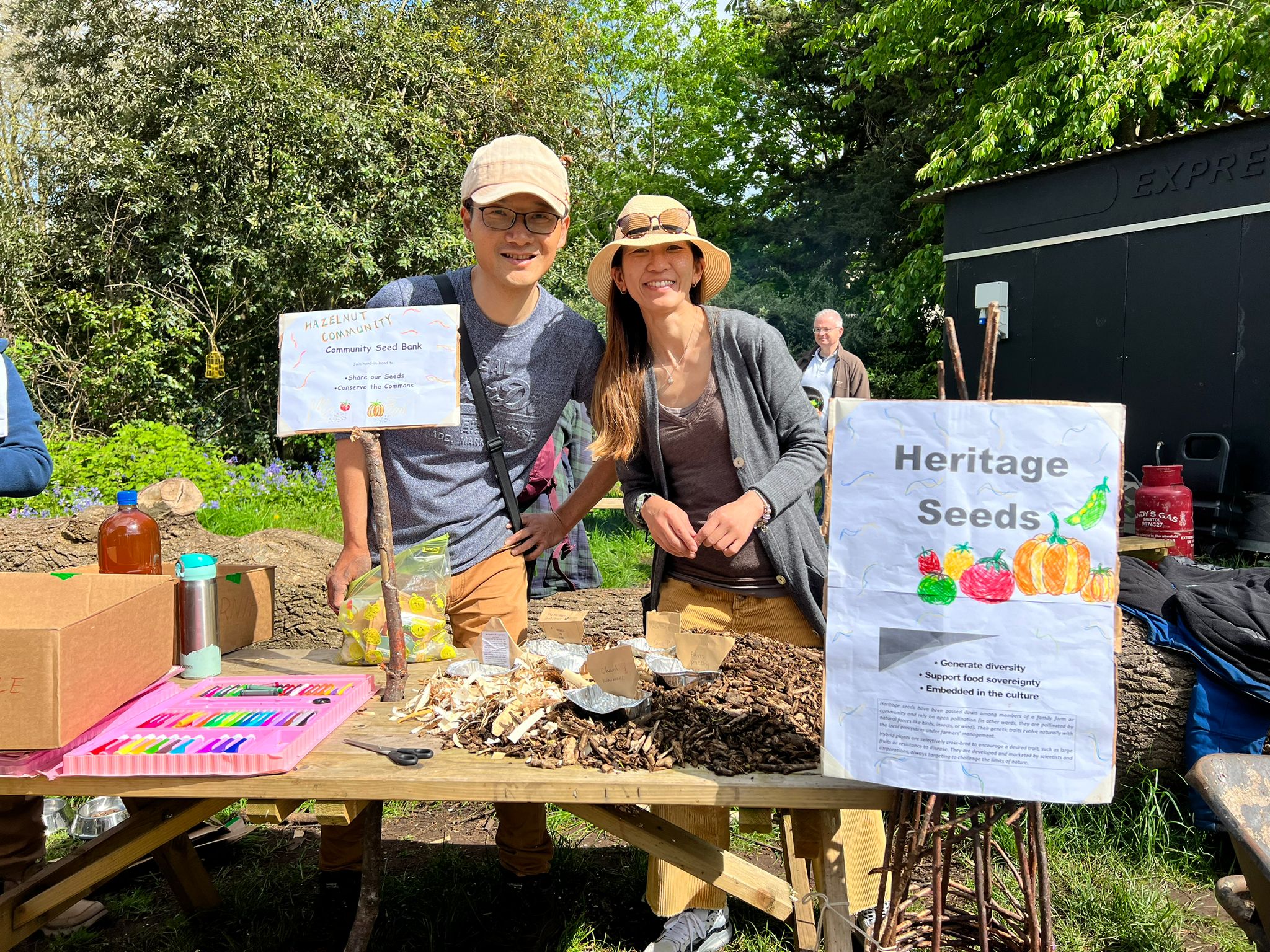
“If you want to start growing your own food, start with a plant indigenous to where you are from to feel connected with the plant you are growing”. He told me when I asked how to start planting as a newbie, and generously gave me some seeds for a Bath lettuce, a unique variety indigenous to Bath (my home town), to plant in my own tiny herb garden in Bristol.
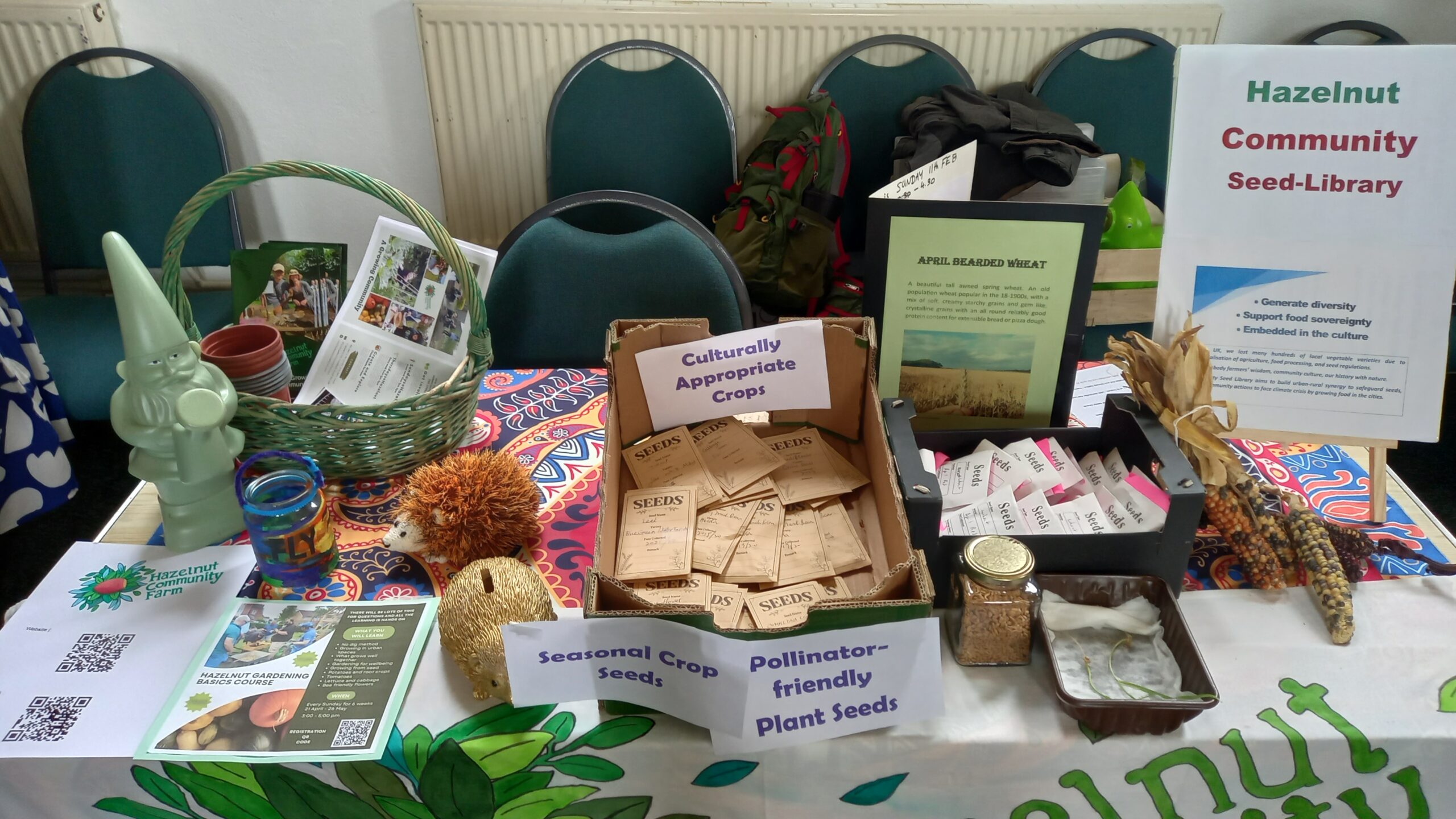
Most seeds you buy from packets are F1 seeds – hybrid seeds that have been modified to make them more robust, produce fatter or juicy vegetables, or fruit, or give them immunity to diseases or pests. Although attractive, the downsides to growing these plants is that the seeds they produce will be infertile, and the grower will have to depend upon seed manufacturers and the seed’s history is lost. Today, three companies control about half of all seeds grown on the planet, many of which are patented.
Angus believes that seed swapping and recycling is key to retaining that sense of connection to the land, increasing the awareness of the unique varieties of heritage seeds out there, and to stop seed manufacturers dictating what people are planting in their back garden.
If you want to learn more about how to grow in your back garden and get some insight into the wonderful world of heritage seeds, then pop down to Hazelnut Community Garden on a Sunday or Thursday afternoon. You can also sign up to be a Bristol Seed Guardian, and get support to protect heritage seed varieties. Recycling and conserving seeds is an opportunity to observe the plants entire life cycle, as you must not harvest the vegetables from a plant to be able to conserve the seeds.
Hazlenut Community are a nationwide effort to build up community gardens within churches and improve connection, faith and learn about efforts to mitigate climate change.
Read Tilda Teale’s previous story for Bristol Good Food about how a few local high street gems are still holding onto the tradition of family trades, familiar faces, and businesses passed down through generations, offering not just great food but the kind of community connection supermarkets can’t replicate.
To stay updated on future events, job opportunities and news, don’t forget to sign up for the Bristol Good Food Update at bristolgoodfood.org/newsletter.
So, what change do you want to see happen that will transform food in Bristol by 2030? Do you already have an idea for how Bristol can make this happen? Join the conversation now.
* Required field
Urban Growing
Urban Growing
Urban Growing
Urban Growing