Local Food Economy
Reducing waste, reducing costs: Reflections
By Emily Potter
Local Food Economy
By Emily Potter
Bristol Food Network (BFN) volunteer and nutritionist Emily Potter reflects on the latest Hospitality for the Future event, where Bristol’s hospitality businesses came together to share practical ways to cut food waste, save money and get ahead of new legislation coming in 2027. Read on for the key takeaways, and join us at the next session on Tuesday 8 September to see how your business can make a positive impact.
The second session in BFN’s and Bristol BID’s Hospitality for the Future series was a deep dive into all things food waste. New legislation coming into place in March 2027 will mean every business has to separate food waste from general waste, so this session was about sharing solutions between businesses that will make the most of this change, rather than let it become an extra stress. To share real life examples, we invited two fantastic speakers, Griff Holland (Double Puc Cafe & Catering) and Georgia Hussey (Loki Poké), to talk through how they’ve tackled food waste in their own businesses.
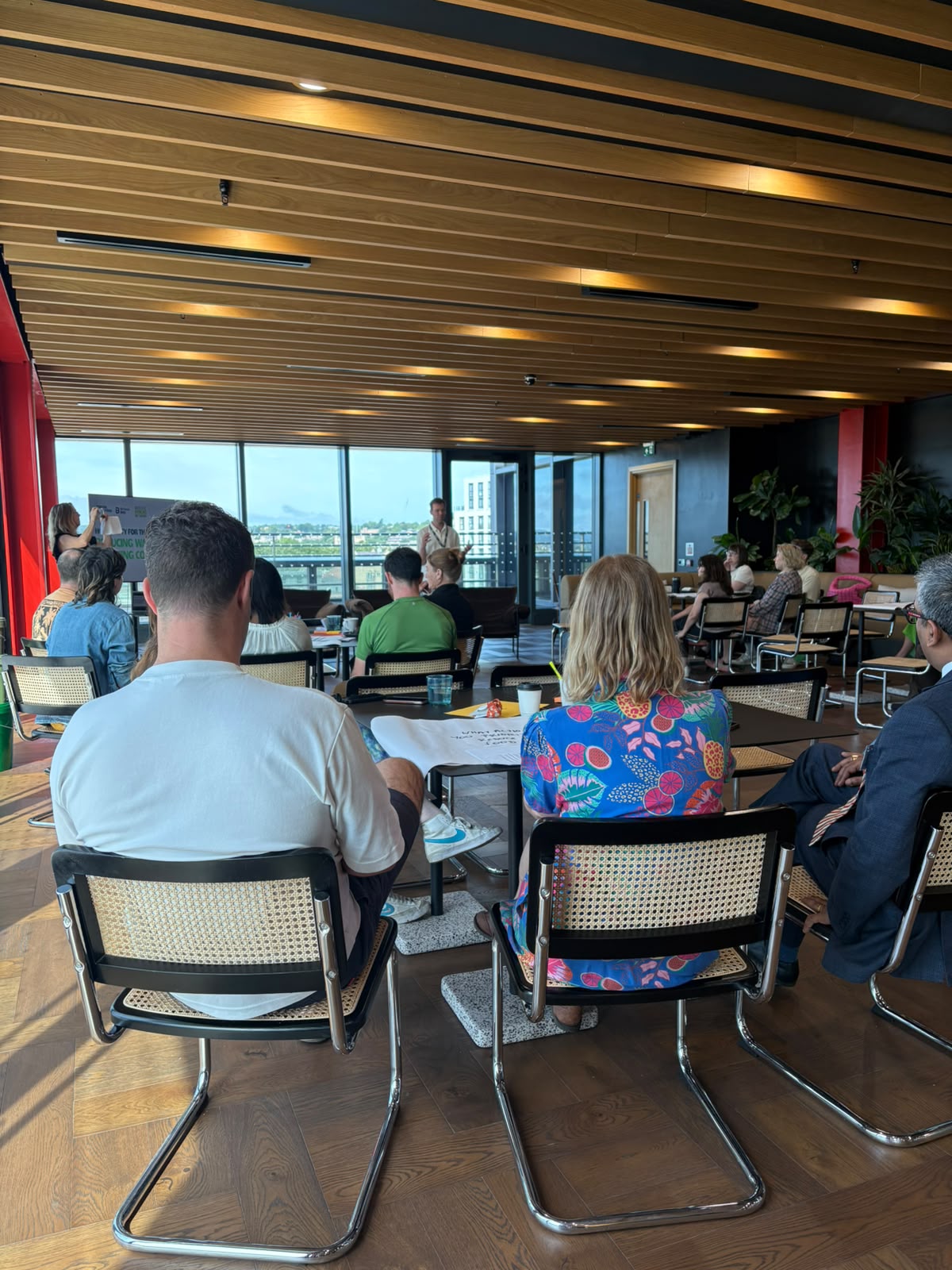
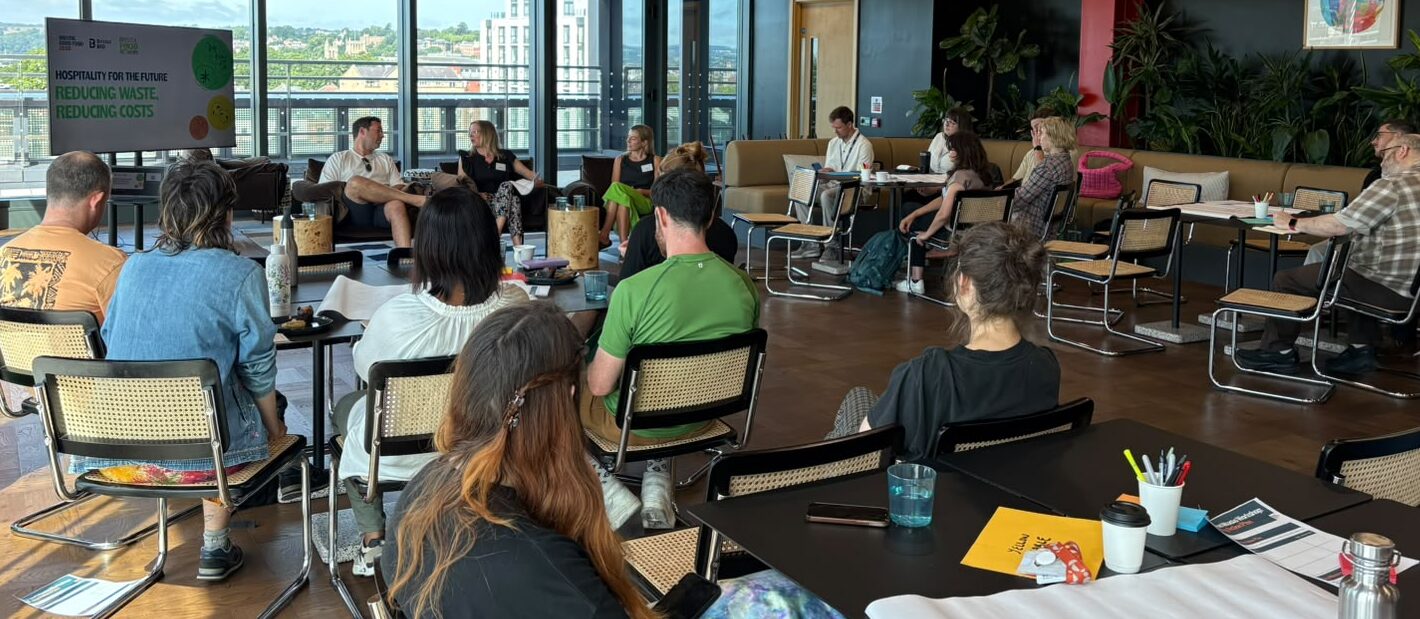
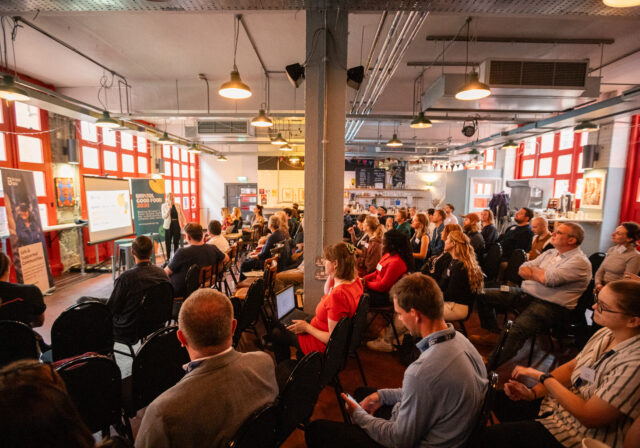
Walking into the event space was dreamy! It was hosted in the wonderful rooftop terrace bar in the EQ building. On this gloriously sunny day, the views stretched for miles. We had a real mix of attendees in the room – hospitality owners, charities and reps from Bristol City Council, all with a shared interest in understanding the reduction of food waste.
The session kicked off with a conversation between Griff and Georgia about what they’d both done in their businesses to reduce waste. Georgia talked about turning scraps into kimchi and other ferments, and about how looking closely at their suppliers had paid off – swapping from buying kimchi abroad to working with Bath Culture House locally, which turned into a win-win for both businesses. Georgia got local produce with less air miles and Bath Culture House could grow and expand with this new consistent business.
Griff’s approach was more about systems: using sales data to build tighter orders and prep lists, recording every bit of wastage and working backwards from it. His belief in data and staff training let him to create his own hospitality database system, Rocket, to help keep track of waste and spend, as well as better planning to reduce both. Georgia also spoke about the particular challenge of festivals, where different suppliers, sites and weather make waste much harder to predict, and how her team now works with Bristol charity Feed the Homeless to pass on any excess stock.
The Q&A section brought up technology versus manual approaches to recording waste. Rocket now gives Griff’s team a weekly steer on whether they’re on track or wasting too much, while Georgia’s approach is lower-tech but just as effective: a whiteboard for anything thrown out, photographed and sent to her on WhatsApp for a live picture of what’s coming in and out. We also heard some lovely small ideas such as “eat me first” fridge shelf scaled up for business use, and the reminder that food waste accounts for around 8-10% of global emissions – nearly as much as transport. One organisation that got many shout outs was Generation Soil, who collect your food scraps, turn them into compost and deliver you back the compost.
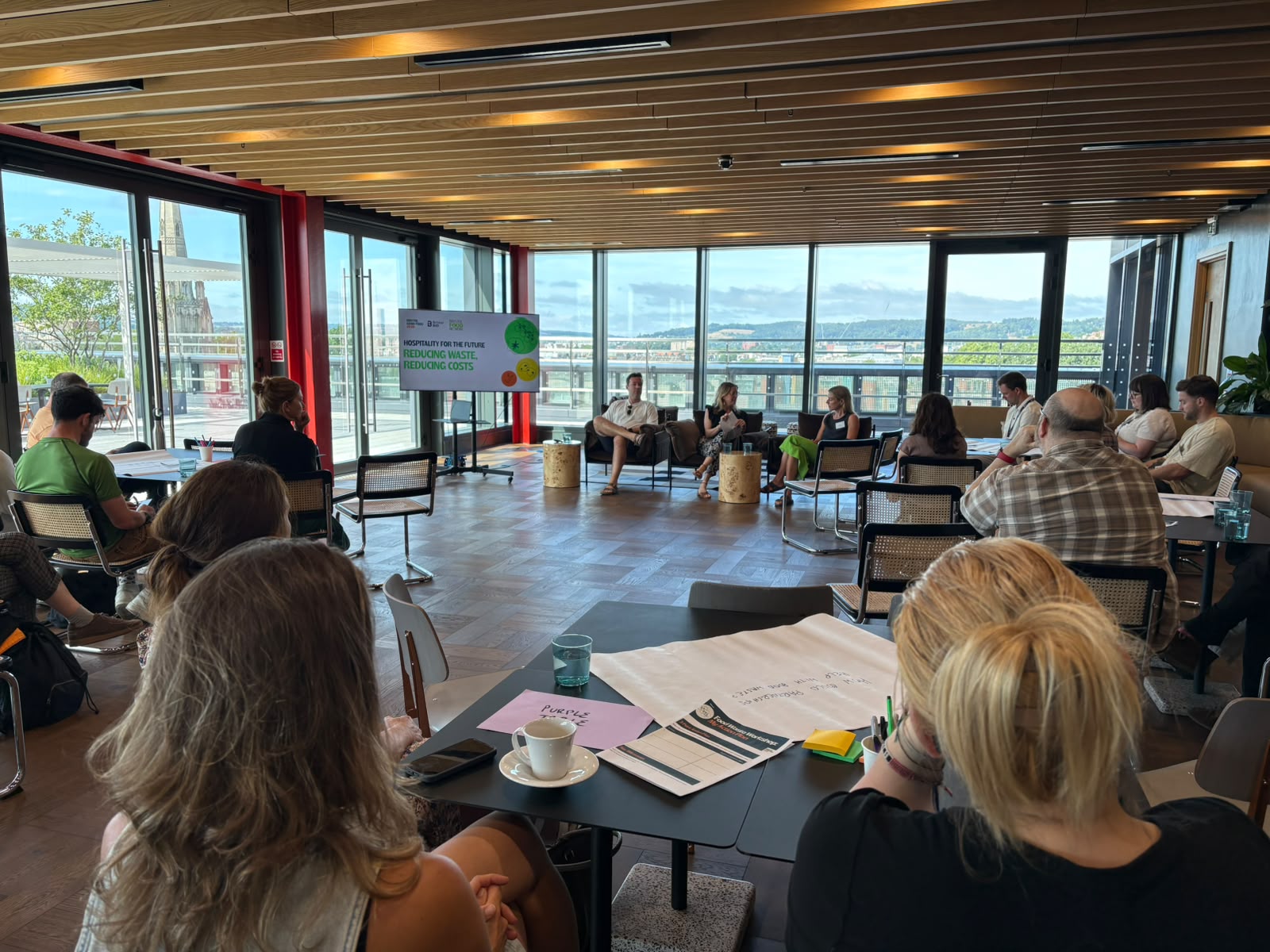
From there we moved into the workshop, and this was really the heart of the session. With attendees split across five tables, each group worked through a different question – what actions they’d prioritise to cut food waste, what it might actually be costing them (and how to even start finding that out if they don’t know), what their current methods look like, and what’s stopping them going further.
A challenge that came up again and again was this: you can pour time and money into building the perfect system, but if your staff don’t understand why it matters, they won’t follow it, and an unused system is no system at all. The answer the room kept landing on was education and motivation, not just instruction. One brilliant, concrete suggestion was booking a free tour through GENeco in Avonmouth, who’ll take your team round the recycling plant and show them exactly what happens to food waste once it leaves your kitchen. Seeing the scale of it in person, rather than just being told to fill in a form correctly, is the kind of thing that actually shifts behaviour.
Tables also dug into how suppliers could be part of the solution – several people admitted they’d never actually asked their suppliers what support was available, and we talked through menu reformulation, building dishes around “hero” ingredients that show up more than once so nothing sits unused in the fridge. We closed the workshop with each table feeding back to the room, before pulling their ideas together into the first steps of a food waste action plan they could take back to their own business.
It was brilliant to see so many different parts of Bristol’s food scene in one room, comparing notes on something that affects every single one of their businesses. With the new legislation on the horizon, sessions like this are exactly what’s needed.
Whether you were at the event or not, you can download the Bristol Good Food 2030 Food Waste Workshop Toolkit here to support your business.
The next event in the Hospitality for the Future series, “Hospitality for our Community”, takes place on Tuesday 8 September, register your spot for free now.
To stay updated on future events, job opportunities and news, don’t forget to sign up for the Bristol Good Food Update at bristolgoodfood.org/newsletter.
So, what change do you want to see happen that will transform food in Bristol by 2030? Do you already have an idea for how Bristol can make this happen? Join the conversation now.
* Required field
Local Food Economy

Local Food Economy
Local Food Economy
Local Food Economy