Food Waste
Composting at the Heart of BS13
By Ruby Laming
Food Waste
By Ruby Laming
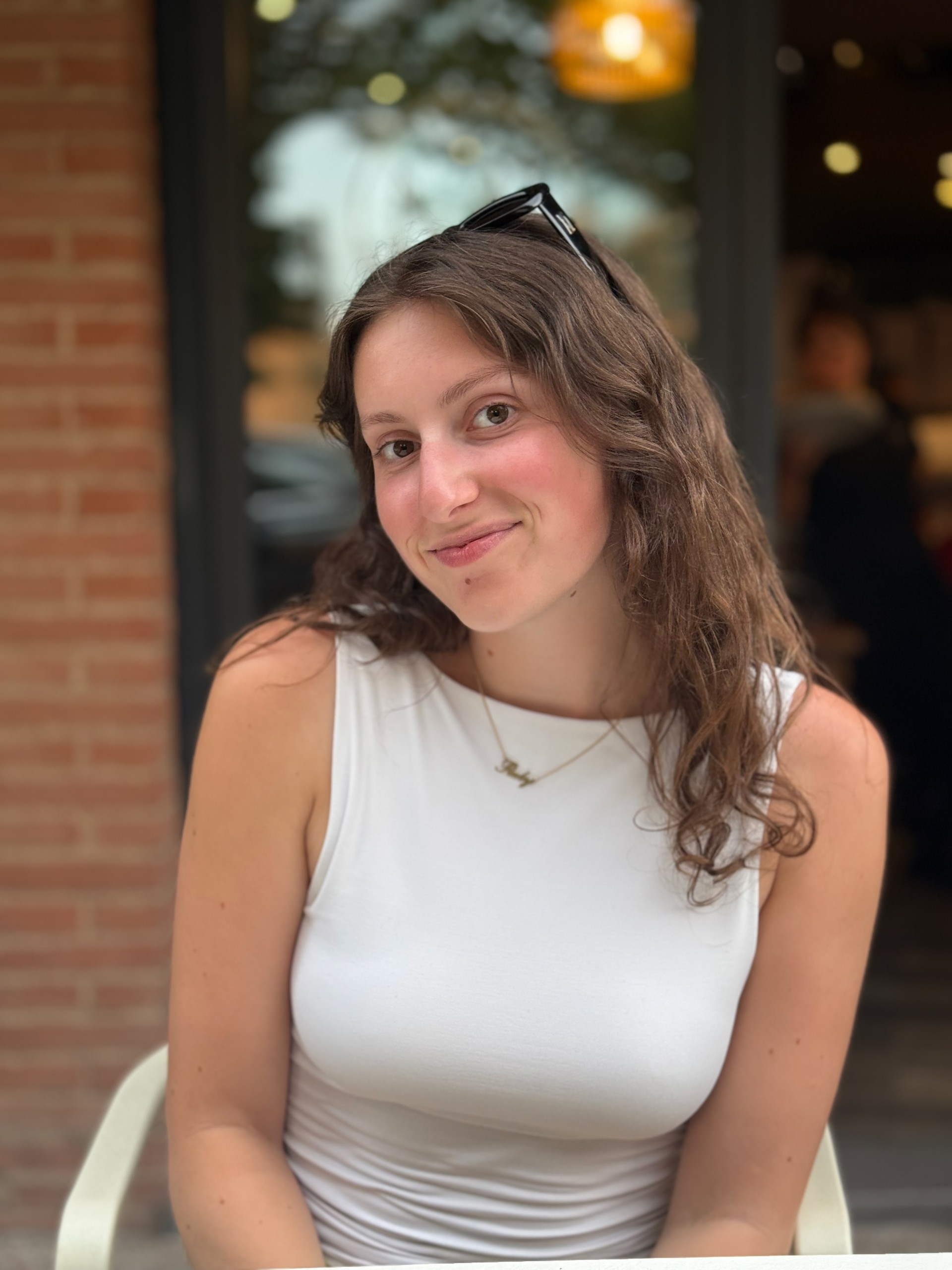
Ruby Laming (pictured left) shares the impact of food waste and the importance of composting in supporting local projects, strengthening the community, and creating a circular system. Whether you’re a local business looking for a food waste collection service, keen to learn the art of composting or simply want to volunteer, Heart of BS13 has an opportunity for you to get involved.
One thing that really surprised me when I met Jenny, the compost lead at Heart of BS13, was learning that, until recently, businesses in England weren’t legally required to separate their food waste. She explained that while the law now applies to businesses with more than 10 employees, from March 2027 it will apply to every business, regardless of its size. It really put into perspective just how much food waste has been slipping through the cracks. To help businesses prepare for the change, Bristol Good Food 2030 and the Bristol BID recently ran a session for people working in hospitality. You can read more about it in this blog.
For many businesses, that change may feel like another obligation. But at Heart of BS13, food waste has never been seen as a problem to dispose of, quite the contrary, instead it is a valuable resource.
Tucked away at Heart of BS13 in Hartcliffe, this composting project is turning food waste from local businesses into nutrient-rich compost that feeds gardens, flower farms and community spaces across South Bristol. It’s a simple idea that keeps valuable resources local and gives them a second life.
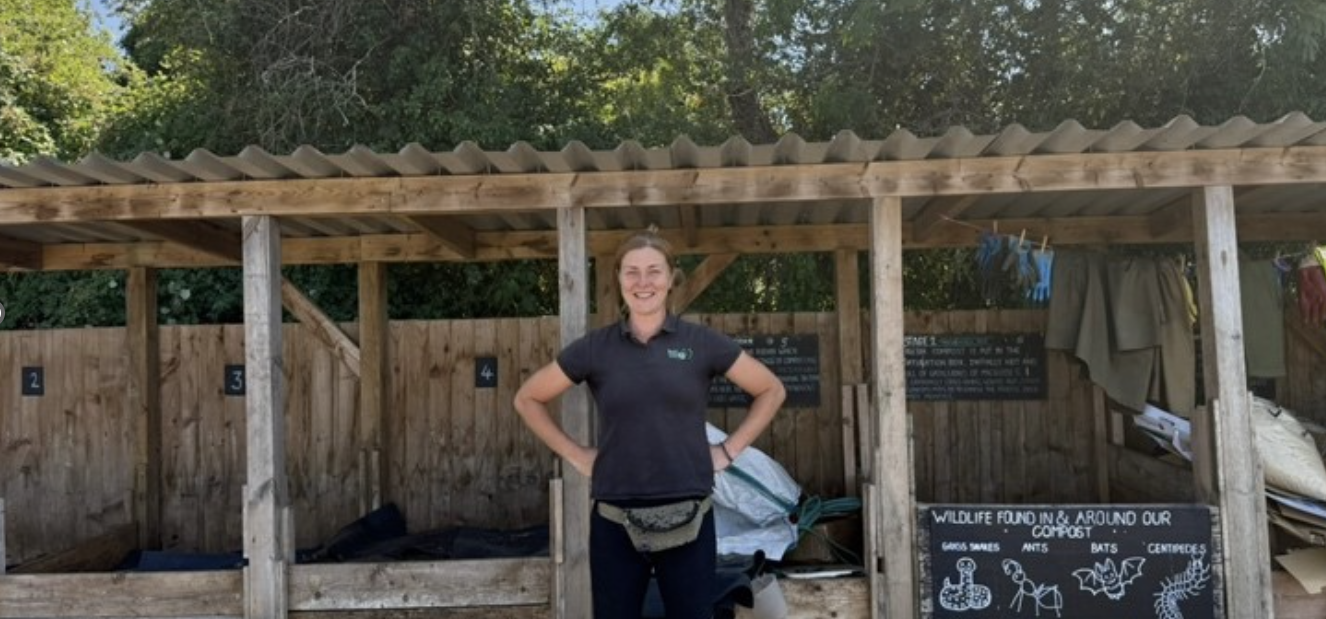
What started with just five compost bays has grown into a thriving operation with more than 30 composting spaces, processing around 600 litres of food waste every week.
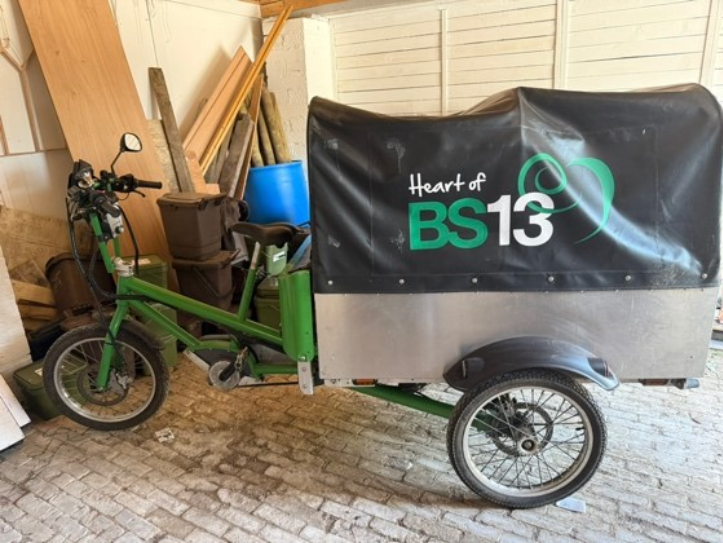
Collected by Jenny on a cargo e- bike from cafés, schools and other local businesses, the food waste never leaves Bristol before being transformed into something valuable.
“People don’t realise the damage food waste does.” Food waste sent to landfill produces methane, one of the most potent greenhouse gases, while incinerating it is far from an ideal solution.
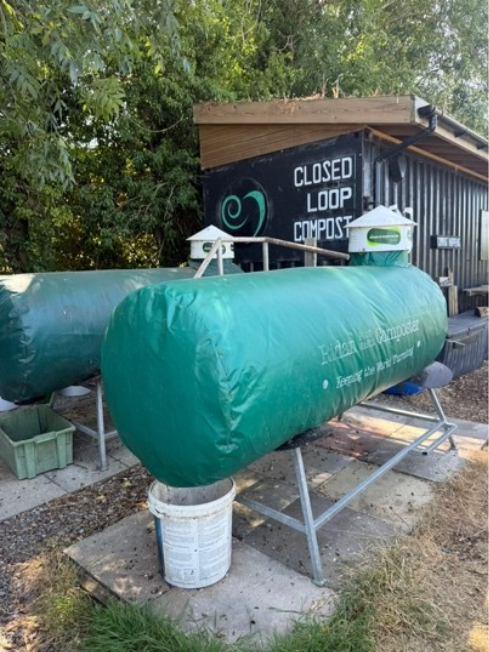
Instead, Heart of BS13 sees food waste as a resource.
The collected food scraps are carefully composted using specialist Ridan composters, where naturally occurring bacteria generate temperatures of around 60°C, breaking down the waste safely and efficiently. The resulting compost is rich in nutrients and sold locally as garden nourisher, potting mix and seedling compost.
Unlike many commercial composts, which rely on imported material, every bag sold here is made entirely from Bristol’s own organic waste!
It’s a truly circular system: local businesses produce the food waste, local people turn it into compost, and local gardens benefit from the finished product.
It was particularly interesting to find out just how much wildlife these compost sites support.
The warm compost heaps have become home to slow worms, frogs, and even grass snakes.
Bats swoop overhead at dusk, helping to keep fly populations naturally under control, while worms tell Jenny when the compost is ready when their tiny castings are scattered across the top.
Volunteers come to Heart of BS13 for many different reasons. Some want to learn practical green skills; others are looking to build confidence or reconnect with their community.
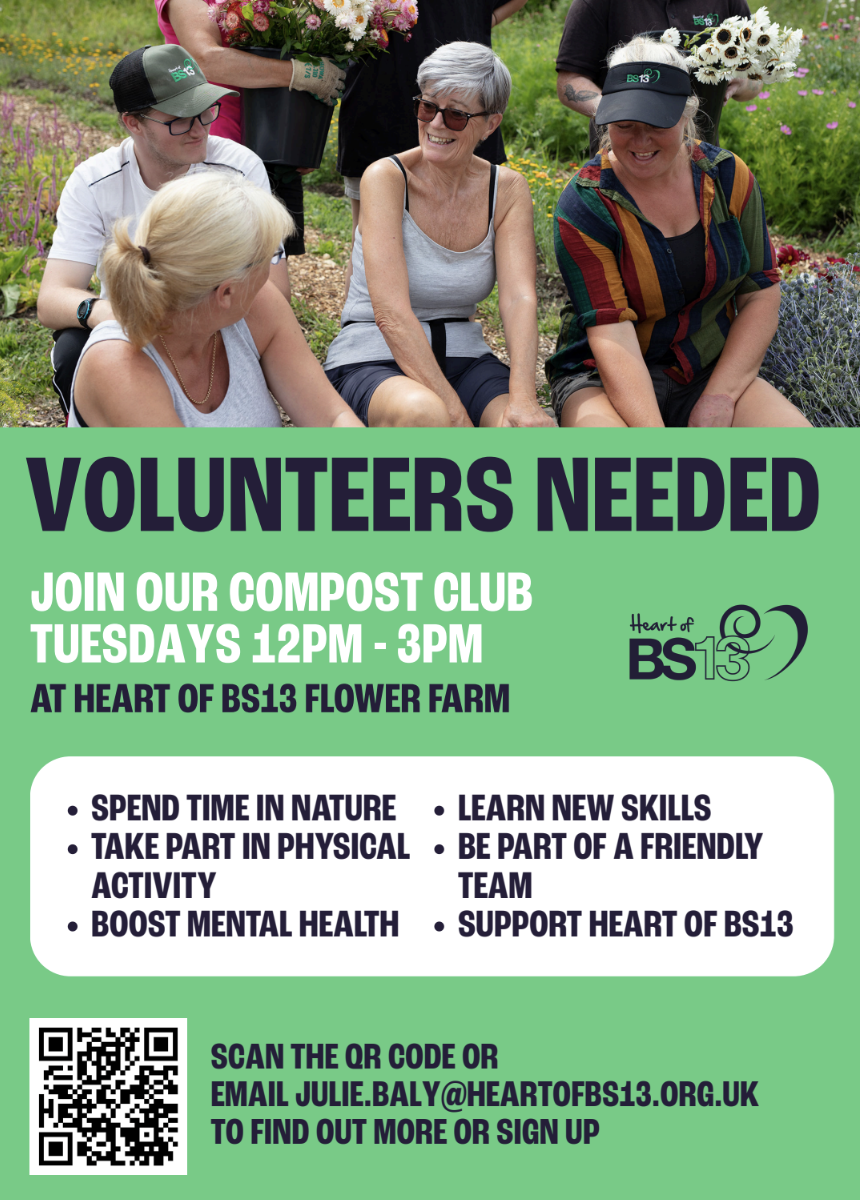
Jenny shared stories of volunteers who have progressed into paid employment after gaining experience through the compost project. Others have improved their physical health, developed confidence or simply found a welcoming place to spend time outdoors with purpose.
With new food waste legislation approaching, Heart of BS13 is hoping to welcome more local businesses to its collection service, particularly smaller independent businesses across South and Central Bristol.
They are also expanding their programme of composting workshops, with a full-day practical composting course on 13 September and the Compost Club every Tuesday from 12pm–3pm.
To stay updated on future events, job opportunities and news, don’t forget to sign up for the Bristol Good Food Update at bristolgoodfood.org/newsletter.
So, what change do you want to see happen that will transform food in Bristol by 2030? Do you already have an idea for how Bristol can make this happen? Join the conversation now.
* Required field

Food Waste
Food Waste

Food Waste

Food Waste