Good Food Governance
Caring for and through food in Bristol
By Dr Barbora Adlerova, Anicée Defrance and Dr Fiorella Picchioni
Good Food Governance
By Dr Barbora Adlerova, Anicée Defrance and Dr Fiorella Picchioni
In this blog, Dr Barbora Adlerova, Anicée Defrance and Dr Fiorella Picchioni from the Observatory of Research and Practice on Food Systems and Social Reproduction explore why recognising invisible and undervalued care work is essential to building more just and sustainable food systems. Drawing on research and insights from Bristol, they ask what needs to change to put care at the heart of food systems transformation. Read on to discover the findings.
Across the world, food systems are embroiled in connected crises, including worsening public and planetary health. Simultaneously, countless big and small initiatives are putting up a fight for more just and sustainable food systems, globally and here in Bristol.
Yet, in these conversations, one crucial dimension is often overlooked: the daily and undervalued care work that reproduces humans, our societies and food systems. From growing, procuring, preparing and serving food to caring for those who produce and consume it, this reproductive work is essential but often invisible and under/unpaid. It is also disproportionately carried out by women, reflecting and reinforcing wider gendered, racialised and class-based inequalities.
At the Observatory of Research and Practice on Food Systems and Social Reproduction at the University of Bristol, we believe that recognising this work is essential to building more equitable, resilient and sustainable food systems. This means asking whose work sustains food systems, who carries the costs, who benefits and who should be held accountable.
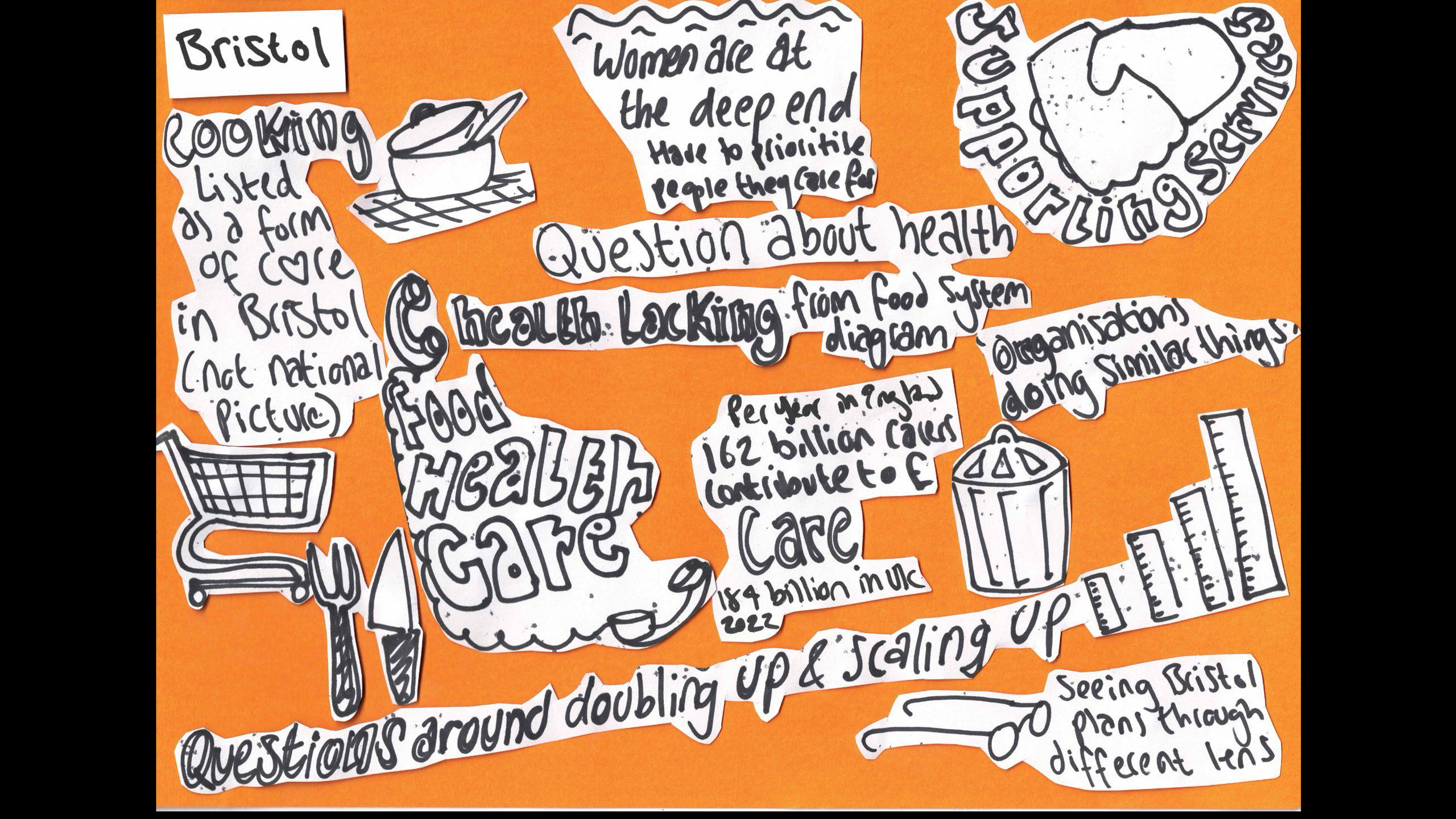
As a first step, we examined how food, care and work feature in national (England) and local strategies and action plans, alongside workshops with wide range of community organisations and local authorities in the Bristol region. Our preliminary analysis (full report and executive summary) reveals an interesting contrast: food, care and work are more explicitly connected in local Bristol strategies than in national policy frameworks.
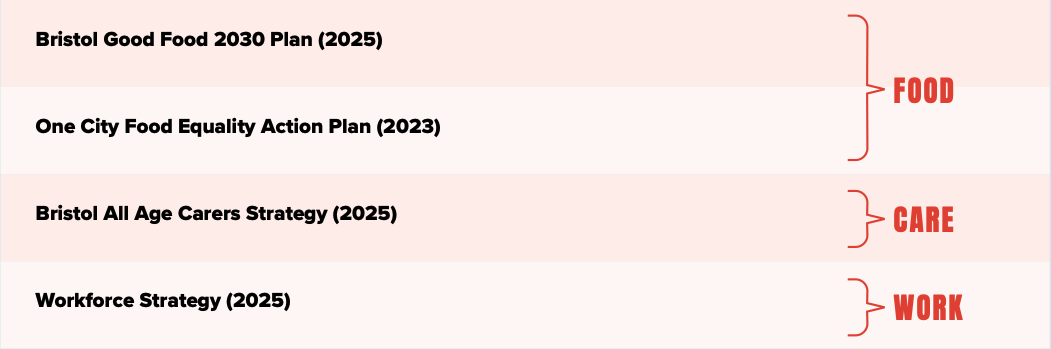
Nationally, whilst the health implications of diets are acknowledged within the National Food Strategy or 10 Year Health Plan for England: fit for the future, food is not framed as a form of care. Indeed, food is absent entirely from the Adult Social Care Priorities for Local Authorities. In contrast, Bristol strategies are more attentive to these links, recognising food as a practical form of care in Bristol All Age Carers Strategy, or emphasising that full-time carers are more likely to experience food insecurity in the One City Food Equality Strategy. Another key local area of overlap are calls for better work conditions in food and care sectors, including wages and social security.
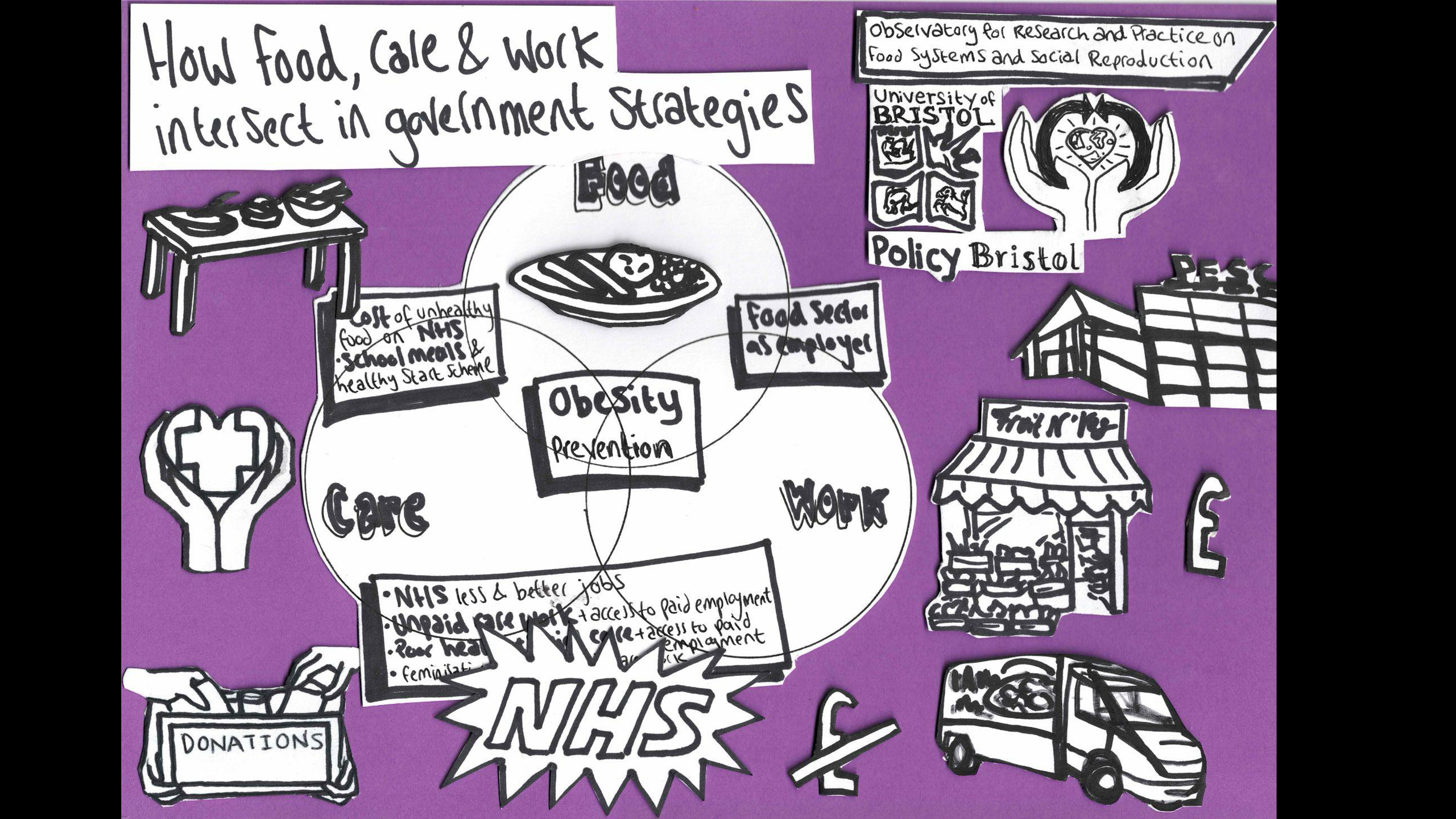
More broadly, all strategies focus on the productive economy and formal waged labour, risking the marginalisation of informal food and care work. This omission is detrimental because current food systems both depend and create further demands on informal and invisible care work, including externalised costs of poor diets, ill health, environmental damage and precarious work .
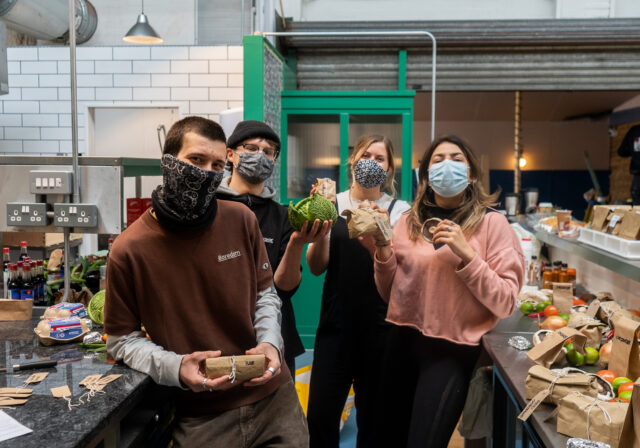
Beyond workplaces and households, community organisations are taking on an increasing portion of this essential care work. In our workshops, participants highlighted how these organisations act as “shock absorbers” for both food insecurity and wider cost of living crisis, without adequate funding or institutional recognition. Much of the work sustaining community food initiatives, including volunteering, governance and food redistribution, is unpaid and often undertaken by women and unpaid carers.
As a result, volunteers and frontline workers are increasingly stretched beyond capacity, experiencing burnout. The pressure is worsened by policy and delivery gaps, in public services (for example, childcare provisioning and holiday hunger) that community organisations are now filling.
So, what needs to change?
Participants called for local and national long-term, stable funding frameworks to properly value and support community food organisations. This could include paid roles and investment in community food infrastructure (for example, community kitchens, hubs and storage facilities) enabling people to access and share food, and build communities and mutual learnings.
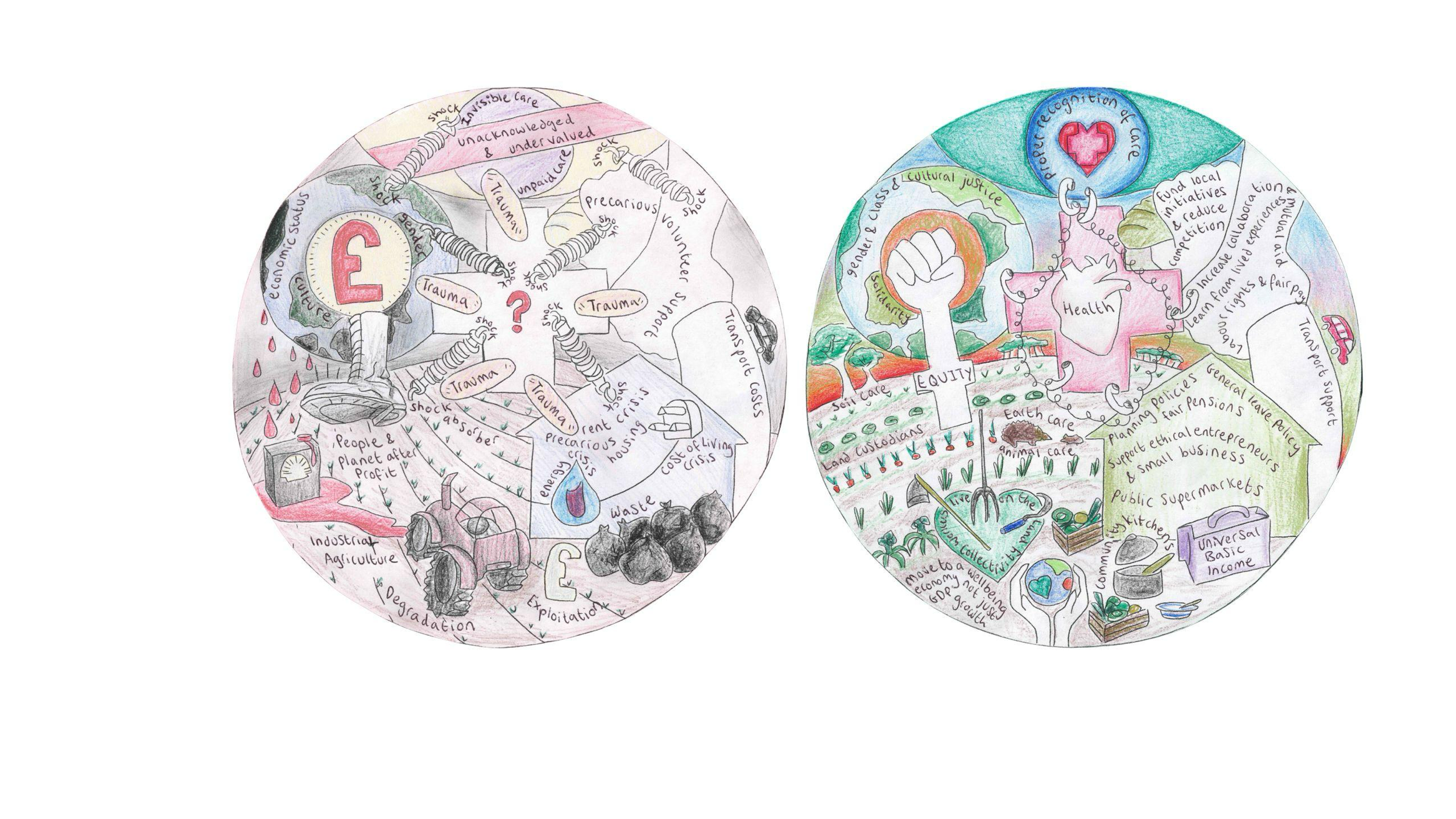
Ultimately, a more just and sustainable food system requires us to look beyond what food is produced and consumed. There can be no just, resilient and sustainable food systems without valuing the people and labour that sustain them. This means recognising all forms of work – paid and unpaid, formal and informal – and ensuring that everyone working in food systems has access to fair terms and decent conditions of work. Their contributions must not be taken for granted, overlooked or treated as an afterthought. They must be at the heart of food systems transformation.
If you want to know more about our work or how to get involved, please get in touch at Obs-FSSR@bristol.ac.uk or connect via LinkedIn.
So, what change do you want to see happen that will transform food in Bristol by 2030? Do you already have an idea for how Bristol can make this happen? Join the conversation now.
* Required field
Good Food Governance
Good Food Governance
Good Food Governance

Good Food Governance